Customs Today
  • Home
  • Islamabad
  • Karachi
  • Lahore
  • National
  • Transfers and Postings
  • Chambers & Associations
  • Business
No Result
View All Result
Customs Today
  • Home
  • Islamabad
  • Karachi
  • Lahore
  • National
  • Transfers and Postings
  • Chambers & Associations
  • Business
No Result
View All Result
Customs Today
No Result
View All Result
Home Science & Technology Science

SpaceX completes design testing of SuperDraco engines

byCustoms Today Report
13/11/2015
in Science, Science & Technology
Share on FacebookShare on Twitter

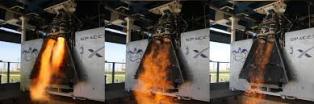
HONG KONG: SpaceX has completed design testing of its SuperDraco engines, which, as a key element of the Crew Dragon’s launch abort system (LAS), would be responsible for carrying a crew of astronauts out of harms way in the event of a launch failure.

Once complete, the Crew Dragon spacecraft will represent one of the cornerstones of NASA’s drive to establish a cost effective, independent access to low-Earth orbit (LEO). For it to become human-rated, NASA has set a stringent set of criteria that must be met. One such criteria is the integration of a tried and tested LAS.


You might also like

Tesla driverless system to use updated radar technology

12/09/2016

Apple to develop its own self-driving technology

10/09/2016

In the pursuit of this goal, SpaceX has decided to buck the trend, opting for an integrated system of four pairs of SuperDraco thrusters built in to the side of the crew capsule. That’s a notably different approach to a key competitor in the Commercial Crew Development program – Boeing – which has opted for the traditional “rocket tower” design for the LAS system to protect crew riding aboard its Starliner spacecraft.

In the development of the SuperDraco thrusters, SpaceX embraced advances in the sphere of 3D printing technology. A key element of the rocket, known as the combustion chamber, is fabricated using solely 3D printing, cutting down on cost, waste, and making the production process more flexible in general.

During the recent testing at the company’s rocket development facility in Texas, the thrusters were placed on a test stand and fired 27 times, progressing through various thrust cycles. The tests come in the wake of last year’s LAS pad test for the Crew Dragon spacecraft, which served as proof that the design was indeed feasible.


Related Stories

Tesla driverless system to use updated radar technology

byCT Report
12/09/2016

WASHINGTON: Electric carmaker Tesla announced Sunday it was upgrading its Autopilot software to use more advanced radar technology. In a...

Apple to develop its own self-driving technology

byCT Report
10/09/2016

SAN FRANCISCO: Apple may not become an automaker, but it still wants to develop its own self-driving technology. The iPhone-maker's...

NASA spots slowest known magnetar

byCT Report
10/09/2016

WASHINGTON: Astronomers have found evidence of a magnetar - magnetised neutron star - that spins much slower than the slowest...

‘YouTubers’ outshining old-school television

byCT Report
09/08/2016

SAN FRANCISCO: A media revolution is taking place, and most people over 35 years of age aren’t tuned in. Millennial...

Next Post

Mysterious object heading towards the Earth as space debris, scientists

  • Terms and Conditions
  • Disclaimer

© 2011 Customs Today -World's first newspaper on customs. Customs Today.

No Result
View All Result
  • Transfers and Postings
  • Latest News
  • Karachi
  • Islamabad
  • Lahore
  • National
  • Chambers & Associations
  • Business
  • About Us

© 2011 Customs Today -World's first newspaper on customs. Customs Today.