Customs Today
  • Home
  • Islamabad
  • Karachi
  • Lahore
  • National
  • Transfers and Postings
  • Chambers & Associations
  • Business
No Result
View All Result
Customs Today
  • Home
  • Islamabad
  • Karachi
  • Lahore
  • National
  • Transfers and Postings
  • Chambers & Associations
  • Business
No Result
View All Result
Customs Today
No Result
View All Result
Home Science & Technology Science
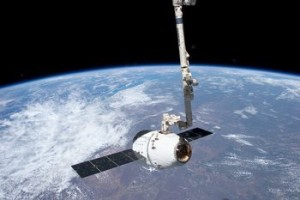
With clouds and land forming a backdrop, the SpaceX Dragon commercial cargo craft is grappled by the Canadarm2 robotic arm at the International Space Station. Expedition 31 Flight Engineers Don Pettit and Andre Kuipers grappled Dragon at 9:56 a.m. EDT and used the robotic arm to berth Dragon to the Earth-facing side of the station’s Harmony node at 12:02 p.m. May 25, 2012. Dragon became the first commercially developed space vehicle to be launched to the station vehicle to be launched to the station to join Russian, European and Japanese resupply craft that service the complex while restoring a U.S. capability to deliver cargo to the orbital laboratory. Dragon is scheduled to spend about a week docked with the station before returning to Earth on May 31 for retrieval.

With clouds and land forming a backdrop, the SpaceX Dragon commercial cargo craft is grappled by the Canadarm2 robotic arm at the International Space Station. Expedition 31 Flight Engineers Don Pettit and Andre Kuipers grappled Dragon at 9:56 a.m. EDT and used the robotic arm to berth Dragon to the Earth-facing side of the station’s Harmony node at 12:02 p.m. May 25, 2012. Dragon became the first commercially developed space vehicle to be launched to the station vehicle to be launched to the station to join Russian, European and Japanese resupply craft that service the complex while restoring a U.S. capability to deliver cargo to the orbital laboratory. Dragon is scheduled to spend about a week docked with the station before returning to Earth on May 31 for retrieval.

SpaceX makes fourth successful rocket landing

byCT Report
28/05/2016
in Science, Science & Technology
Share on FacebookShare on Twitter

MIAMI: SpaceX launched an Asian communications satellite into a distant orbit Friday and for the fourth time managed to recover the rocket that did the work.

Under blue skies dotted with clouds, the shiny white Falcon 9 rocket blasted off from Cape Canaveral, Florida at 5:40 pm (2140 GMT) carrying the Thaicom 8 satellite.


You might also like

Tesla driverless system to use updated radar technology

12/09/2016

Apple to develop its own self-driving technology

10/09/2016

The rocket returned to Earth about 10 minutes later, firing its engines and maneuvering with its fins to an upright position on a powered barge, known as a drone ship, positioned in the Atlantic Ocean some 420 miles (680 kilometres) off the Florida coast.

SpaceX headquarters in Hawthorne, California erupted in cheers as the rocket touched down. At first, the live webcast cut out briefly as the rocket neared the drone ship, then footage returned, showing the scorched but intact rocket standing straight and appearing steady.

“Rocket landing speed was close to design max,” said SpaceX CEO Elon Musk on Twitter, noting that there was some “back and forth motion.” “Prob ok, but some risk of tipping,” he added.

Musk wants to revolutionize the launch industry by making rocket components reusable, much the same way as commercial airplanes. Currently, expensive rocket parts are jettisoned into the ocean after each launch.

SpaceX has managed to successfully land the first stage of its Falcon 9 rockets three times before – twice on water and once on land. This is the second time SpaceX has landed on the ocean platform after a launch to geostationary transfer orbit, which is much further than the low-Earth orbit altitude at which the International Space Station circles the globe.

The high speed and heat involved with the rocket’s return make a steady touchdown more challenging than a low-Earth orbit launch. The primary mission of the launch was also a success. The Thaicom 8 satellite, which weighs about 6,600 pounds (3,000 kilograms) was deployed as planned.


Related Stories

Tesla driverless system to use updated radar technology

byCT Report
12/09/2016

WASHINGTON: Electric carmaker Tesla announced Sunday it was upgrading its Autopilot software to use more advanced radar technology. In a...

Apple to develop its own self-driving technology

byCT Report
10/09/2016

SAN FRANCISCO: Apple may not become an automaker, but it still wants to develop its own self-driving technology. The iPhone-maker's...

NASA spots slowest known magnetar

byCT Report
10/09/2016

WASHINGTON: Astronomers have found evidence of a magnetar - magnetised neutron star - that spins much slower than the slowest...

‘YouTubers’ outshining old-school television

byCT Report
09/08/2016

SAN FRANCISCO: A media revolution is taking place, and most people over 35 years of age aren’t tuned in. Millennial...

Next Post

Chinese envoy says CPEC to help Pakistan become Asian Tiger

  • Terms and Conditions
  • Disclaimer

© 2011 Customs Today -World's first newspaper on customs. Customs Today.

No Result
View All Result
  • Transfers and Postings
  • Latest News
  • Karachi
  • Islamabad
  • Lahore
  • National
  • Chambers & Associations
  • Business
  • About Us

© 2011 Customs Today -World's first newspaper on customs. Customs Today.