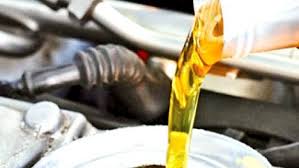
COLOMBO: Sri Lanka’s lubricant market grew at 6.8 percent to 23.4 billion rupees in 2015, with 10.1 percent growth in automotive lube and 7.7 percent increase in industrial lube, the lubricant market report 2015, compiled by Public Utilities Commission of Sri Lanka (PUCSL) said.
However marine lubricant market has shown a reduction of 37.7 percent in 2015 compared to year 2014 while greases market has shown a moderate growth of 4.7 percent. In the automotive lubricants market segment the highest growth is shown in four stroke motorcycle oil with an increase of 29 percent and petrol vehicle lubricants have increased by 14.8 percent.

“This is undoubtedly due to large increase in imports of motorcycles and gasoline driven cars during 2015.” The Commission says in the report.
The diesel vehicle lubricant has shown an increase of only 2.3 percent while gear oil consumption has increased by 12.5 percent. Automatic transmission fluid consumption has increased by only 2.8 percent, which appears to be relatively low compared to the increase in gasoline engine lubricants.
“Virtually all the increase in gasoline engine oil is in multi-grade oils, amounting to 90 percent of the increase. Surprisingly the multi-grade oil consumption in the diesel engine oil segment show a decline of 11 percent compared to the previous year,” the Commission added. “It is appears as the diesel lubricant consumers are switching from multi-grade to mono-grade.”
Currently, 13 operators share Sri Lanka’s lubricant market, who are authorized to import, export, sell, supply and distribute lubricants, while only three operators among them, are authorized to blend lubricants.
Chevron Ceylon lubricant market share narrowed to 47.58 percent in 2015 (49.30% in 2014) with nearest competitor, Indian Oil Corporation Limited seized 14.86 percent of market share in the same year up from 12.59 percent in 2014.
Market share of Ceylon Petroleum Corporation also decreased to 9.19 percent in 2015 from 10.54 percent in 2014. During the year 2015, a total of 3,167 Kilo Liters of Lubricants were exported to regional markets up by 8 percent with respect to year 2014. During the year 2015, 37,797.00 kL of lubricants were produced (blended) locally.
Around 75 percent of the blending was carried out at the lube blending plant of Chevron, 20 percent was produced at lube blending plant belonging to IOC and remaining 5 percent was produced by Laugfs Holdings Limited.
The Government of Sri Lanka receives income from the authorized parties by way of a bi-annual fixed and in some cases a variable registration fee, which is equivalent to 1 million rupees or 0.5 percent of total invoiced sales for that period, whichever is higher, subject to a maximum of five million rupees.
In 2015, the total recognized registration fee to the Government is approximately 74 million rupees which is a 7 percent boost compared to the previous year, the report said.
PUCSL currently acts as the shadow regulator for the lubricant industry. Meanwhile the Government announced last year, that it will provide legislative backing to broaden and strengthen the PUCSL as the regulator for petroleum sector in Sri Lanka enabling a more cost reflective transparent pricing mechanism.
With the view of implementing the budget proposal in 2016, Cabinet of Ministers approved the proposal made by Ravi Karunanayake, Minister of Finance, to authorize Public Utilities Commission of Sri Lanka to act as the regulator of the lubricant industry to facilitate the competition of the lubricant industry, at its meeting held on 23rd August 2016.