

Customs Today
  • Home
  • Islamabad
  • Karachi
  • Lahore
  • National
  • Transfers and Postings
  • Chambers & Associations
  • Business
No Result
View All Result
Customs Today
  • Home
  • Islamabad
  • Karachi
  • Lahore
  • National
  • Transfers and Postings
  • Chambers & Associations
  • Business
No Result
View All Result
Customs Today
No Result
View All Result
Home Science & Technology Science

Stanford research team finds marine animal lineages

byCustoms Today Report
20/02/2015
in Science, Science & Technology
Share on FacebookShare on Twitter

You might also like

Karachi Port sets 138-year cargo handling record

17/07/2026

Tesla driverless system to use updated radar technology

12/09/2016

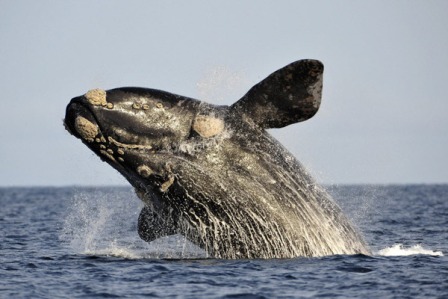
WASHINGTON: After conducting an extensive study on size, a Stanford research team found that, over time, marine animal lineages generally evolve to be larger.
The team, which included research scientists, undergraduates, and high school interns, amassed mountains of data under Stanford paleobiologist Jonathan Payne. The hulking dataset they compiled spans 542 million years, and includes five of the major phyla and over 17,000 genera – about 75 percent of all marine genera in the fossil record, and nearly 60 percent of all animal genera to have ever lived. They described their findings Thursday in Science.
“Size evolution had never been studied at that taxonomic or temporal scale before,” Dr. Payne says, “so it was unknown whether size tended to increase or not across the entire marine fauna. Several previous researchers had speculated or assumed that the average size had increased, but no previous research group had the data to conduct a rigorous test of the claim.”
Cope’s rule, named after 19th century American paleontologist Edward Drinker Cope, is the notion that animal lineages tend to increase in physical size over evolutionary time. Although Cope himself never suggested it, the theory bearing his name has been contested since its proposal. Payne says his research seems to support Cope’s rule.

Tags: marine animalmarine animal lineages generally evolveStanford paleobiologist Jonathan PayneStanford research team found

Related Stories

Karachi Port sets 138-year cargo handling record

byCT Report
17/07/2026

KARACHI: Pakistan's maritime sector has achieved a major milestone as Karachi Port set a new record in its 138-year history...

Tesla driverless system to use updated radar technology

byCT Report
12/09/2016

WASHINGTON: Electric carmaker Tesla announced Sunday it was upgrading its Autopilot software to use more advanced radar technology. In a...

Apple to develop its own self-driving technology

byCT Report
10/09/2016

SAN FRANCISCO: Apple may not become an automaker, but it still wants to develop its own self-driving technology. The iPhone-maker's...

NASA spots slowest known magnetar

byCT Report
10/09/2016

WASHINGTON: Astronomers have found evidence of a magnetar - magnetised neutron star - that spins much slower than the slowest...

Next Post

Kuwait DCGD seizes 650,000 drug pills, 21kg hashish; clutches two smugglers

  • Terms and Conditions
  • Disclaimer

© 2011 Customs Today -World's first newspaper on customs. Customs Today.

No Result
View All Result
  • Transfers and Postings
  • Latest News
  • Karachi
  • Islamabad
  • Lahore
  • National
  • Chambers & Associations
  • Business
  • About Us

© 2011 Customs Today -World's first newspaper on customs. Customs Today.