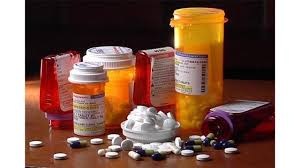
OTTAWA: Lawmakers in more than two-thirds of the states are considering ways to reduce prescription drug costs, including importing them from Canada, as they strive to balance budgets without knowing for sure what their government’s share of the tab will be. A total of 87 bills in 34 states of all political stripes seek to save money on prescription drugs, according to the nonpartisan National Academy for State Health Policy. Six of those states are considering bills that would allow drugs to be imported from Canada, where they cost an average 30 percent less than in the United States.
One is liberal Vermont, where lawmakers have revived a nearly 2-decade old proposal. Conservative Utah is considering a similar proposal. Maryland is looking at creating a commission that would regulate drug costs. States have to balance budgets,” said Trish Riley, executive director of the health policy academy, based in Portland, Maine. “You budget a certain amount of money for drugs in a state employee health program or a Medicaid program, and you’re surprised by the mid-year increases that are unpredictable and huge.” The stakes are high not only for state governments, government employees and Medicaid recipients, but also for anyone else paying for prescription drugs. The federal government does not control drug prices, which are set by drug companies and are subject to costs and competition, while Medicaid negotiates cheaper drugs for low-income Americans. But one hope is that importing drugs can put downward pressure on domestic costs for all, said Utah state Rep. Norm Thurston, a Republican who introduced a drug-import bill in his state. It’s not a liberal-conservative thing,” he said. “It’s not a Democrat-Republican thing.” Of the pharmaceutical industry, he said, “it makes them compete against themselves.” The Pharmaceutical Research and Manufacturers of America, a trade group for drugmakers, argues the proposals would threaten people’s health because quality could not be assured. Safety has nothing to do with the potential for tainted drugs from Canada, said Thurston, whose bill could be debated by the Utah House on Monday. The No. 1 threat to patient safety related to prescription drugs in our state is that the drugs are so expensive that people don’t take them,” Thurston said. “We don’t have any widespread problem in our state with counterfeit drugs.” Allowing patients to buy medication from other countries with strict drug standards, such as Canada, is an idea that has long been floated in Washington by lawmakers of both parties. But each time, it has been blocked by the powerful drug lobby. President Donald Trump has supported opening up imports, and in his State of the Union speech called drug prices an “injustice” and promised action this year. But it’s still unclear whether his administration will take the importation route. New Health and Human Services Secretary Alex Azar has favored other steps to increase competition domestically. Federal law since 2003 has allowed the U.S. health secretary to give states permission to import drugs, but such permission has never been granted. Federal drug-import legislation, introduced by Vermont’s independent U.S. Sen. Bernie Sanders last year, is once again being considered by Congress, though states are taking the bolder approaches. The drug-import concept was highlighted almost two decades ago by Sanders, at the time a U.S. representative, when he took busloads of Vermonters to Quebec to visit Canadian doctors and fill prescriptions. Leukemia patient Jayne Rivera, 59, of Lyndonville, Vermont, has been living on Social Security disability, and her medical costs have been paid by Medicare. While most costs are covered, a year ago she was still paying $60 to $70 a week for about 20 prescriptions.