

MEXICO: Determining ancient ocean temperatures involves a lot of guess-work, but is necessary for understanding climate change trends that affect the planet.
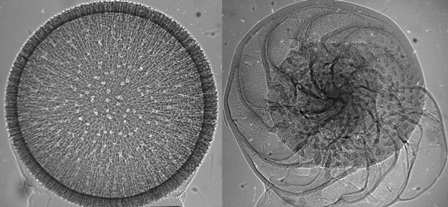
However, a team of climate scientists recently discovered a way to obtain more accurate estimates about those temperatures: by studying plankton stuck in the mud of the floor of the ocean.
The scientists gathered samples of planktic foraminifera from the ocean floor. During their lifespans, some of these plankton species drifted long distances, while others never moved from their initial positions. Careful study of these different species helps scientists narrow down which provide the most accurate temperature estimates.
“This research will help scientists improve the study of past climates because they will be able to look at a species of foraminifera and the core location to very quickly get a sense of how site-specific that particular proxy measure is,”says Dr. Van Sebille, of the ARC Centre of Excellence for Climate System Science at UNSW Australia. “In a way, it will give us a good indication of whether the creature we are looking at to get our past-temperature estimates was a bit of a globetrotter or a stay-at-home type.”
However, using this method alone leaves a wide margin of error because over history, ocean currents change, tectonic plates move and plankton drifts around at various depths. As a result, the team used plankton fossils and created computer models to study oceanic drift. They found that in areas where ocean current was strong, temperatures differed by about 37 degrees from where the fossil was found to its origins. However, in portions of the ocean with slow currents, there was little change in temperature.
Using this method, the team now plans on making a tool that other climate scientists can use for studying oceanic drift, as well as determining ancient temperatures using several plankton species.

Karachi Port sets 138-year cargo handling record
KARACHI: Pakistan's maritime sector has achieved a major milestone as Karachi Port set a new record in its 138-year history...