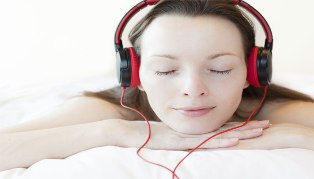
HONG KONG: The brains of people with epilepsy appear to react to music differently from the brains of those who do not have the disorder, a finding that could lead to new therapies to prevent seizures, according to new research.
“We believe that music could potentially be used as an intervention to help people with epilepsy,” said Christine Charyton, from The Ohio State University Wexner Medical Centre.
You might also like


Approximately 80 per cent of epilepsy cases are what is known as temporal lobe epilepsy, in which the seizures appear to originate in the temporal lobe of the brain, researchers said.
Music is processed in the auditory cortex in this same region of the brain, which was why Charyton wanted to study the effect of music on the brains of people with epilepsy.
Charyton and her colleagues compared the musical processing abilities of the brains of people with and without epilepsy using an electroencephalogram, where electrodes are attached to the scalp to detect and record brainwave patterns.
They collected data from 21 patients who were in the epilepsy monitoring unit at The Ohio State University Wexner Medical Centre between September 2012 and May 2014.
The researchers recorded brainwave patterns while patients listened to 10 minutes of silence, followed by either Mozart’s Sonata in D Major, Andante Movement II (K448) or John Coltrane’s rendition of My Favorite Things, a second 10-minute period of silence, the other of the two musical pieces and finally a third 10-minute period of silence.