

LONDON: Catch Saturn, Jupiter, Mars, Venus, and finally Mercury strutting across the heavens and lighting up the morning sky in an unfolding planetary parade beginning about 60 to 90 minutes before sunrise. Two degrees to the left (north) of Venus is Regulus the brightest star in Leo the Lion.
Another date you may want to circle on your calendar is October 17th.
Just go out before dawn and face east where the sun will rise and high in the eastern sky you’ll see the brightest star you ever saw. Look along the eastern horizon around 5:45 a.m. with binoculars to see the extremely thin moon just below Mercury. Mars is much dimmer, but it’s distinctly red and it will be above Jupiter.
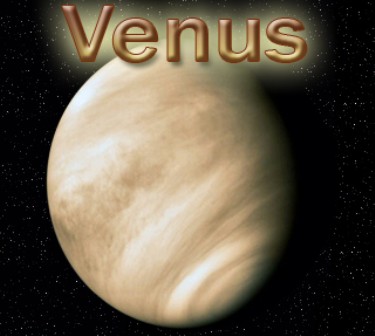
Venus is almost the same size as Earth, and it’s now fairly close to us, which explains its brilliance. Jupiter is right next to Venus and is the second brightest object in the sky in that region.
Whilst Jupiter and Venus are quite easy to observe, Mars is a fainter at this time so this will be a good way to recognise it.
“A check on the website of the National Aeronautics and Space Administration (Nasa) found that the phenomenon where Jupiter appears to be very close to Venus in the sky, also known as the “Conjunction”, is normal”.
This weekend is a fine time to look at our morning planets because the waning crescent moon will be visiting them. Depending on where you live on Earth, north or south, you will see the moon as nearer or farther away from individual planets. On the morning of October 26, they’ll form a tight triangle that you can nearly cover with your thumb when held at arm’s length. That’s going to be an incredible sight! This episode was written and recorded by Art Trevena.

Karachi Port sets 138-year cargo handling record
KARACHI: Pakistan's maritime sector has achieved a major milestone as Karachi Port set a new record in its 138-year history...