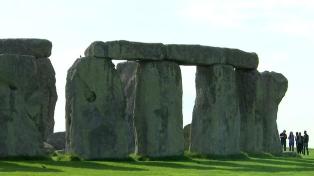


FRANCE: Just a couple of days ago, it was revealed by a team of archaeologists that they have indeed unearthed a ‘superhenge’ much larger than the original Stonehenge found in Wiltshire, England. But further analysis of the discovery led them to find that it is actually larger than estimated.
The team was studying the area surrounding the original Stonehenge to understand hot it came to be. And almost a year ago, the same team unearthed a monolithic shrine just a few miles away from the popular site.
The study entitles Stonehenge Hidden Landscapes (SHLP) recently released their newly gathered data that was taken with the help advanced sensing technologies used in the prehistoric site. They were amazed by the fact that more stones are found beneath the soil.
The stones were roughly 4,500 years old and were unearthed 3 feet under the ground. The team used a combination of non-invasive geophysical prospection and remote sensing technologies that allows humans to get a glimpse of what lies under our feet with excavating it. They were able to track down 90 standing superhenge below ground.
The researchers reported that some of the newly discovered stone stood proudly as high as 4.5 meters which were discovered beneath the outer bank of the Durrington Walls’ superhenge.
Their findings were released on Monday during the opening of the British Science Festival.
Durrington Walls has been popular to house one of the largest-known stonehenge monuments in the world. The area is over 1.5 kilometers in circumference and is surrounded by a 17.6-meter wide ditch with an outer bank. The outer bank is where the 90 standing stones were discovered, according to the researchers.
The study “has revealed an amazing row of up to 90 standing stones a number of which have survived after being pushed over and a massive bank placed over the stones,” said Professor Neubauer, LBI ArchPro’s Director.

Karachi Port sets 138-year cargo handling record
KARACHI: Pakistan's maritime sector has achieved a major milestone as Karachi Port set a new record in its 138-year history...