

WASHINGTON: Don’t fret if work, plans or bad weather prevented you from seeing the supermoon earlier this year. It’s returning on September 27, and it promises to be bigger and better, according to astronomers.
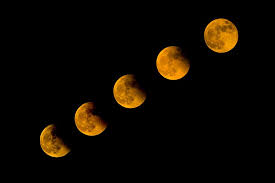
The supermoon will begin to dim slightly at 8:11 p.m. EDT on Sept. 27 (0011 GMT on Sept. 28), NASA officials said. The total eclipse will start at 10:11 p.m. EDT (0211 GMT), and it will last 72 minutes. It will be the first supermoon eclipse since 1982, and the last until 2033.
North and South America, Europe, Africa, western Asia and the eastern Pacific Ocean regions will see a total lunar eclipse that happens to occur when the moon looks abnormally large and bright in Earth’s sky.
Supermoons, which are also called “perigee moons,” take place when the moon becomes full at the same time it’s closest to us in its orbit around Earth. As a result, the moon appears bigger and brighter than usual.
The best time to enjoy a Super Full Moon is after moonrise, when the Moon is just above the horizon, weather permitting. At this position, a Supermoon will look bigger and brighter than when it’s higher up in the sky because you can compare the apparent size of the Supermoon with elements in the landscape – hills, foliage and buildings. This effect is popularly called the Moon illusion.
The supermoon is slated be the main event of the year, Lorraine Hanlon, associate professor of astronomy at UCD has siad earlier, “The moon orbits the earth every 28 days on a slightly rugby-ball sized path,” she said. The very closest supermoon is called a “proxigee.” It happens once every 13 months and 18 days.”

Karachi Port sets 138-year cargo handling record
KARACHI: Pakistan's maritime sector has achieved a major milestone as Karachi Port set a new record in its 138-year history...