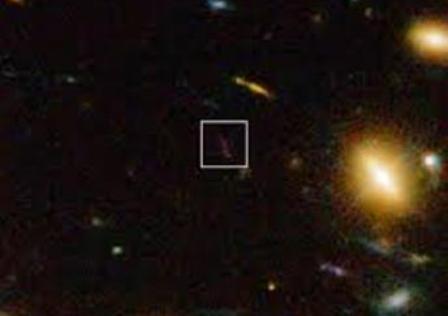


LONDON: Galaxy A1689-zD1 is a very old galaxy. It stands very far from the earth that the astronomers can see the family of stars as it might have existed in the earliest days of galactic formation in the universe. Most of the galaxies from the ancient age show little star formation but the process seems to be highly-active in the dusty grouping.
The comic dust is composed of oxygen, iron, carbon and magnesium. It is often seen in ancient galaxies but mostly new born galaxies are devoid of these materials. The elements are forged very deep in the cores of stars before they are distributed to the space.
Once they get there, these atoms can become reason of formation of new generations of stars prior to the comic dust could build up to the concentrations that is seen in the distant family of stars.
“Although the exact origin of galactic dust remains obscure, our findings indicate that its production occurs very rapidly, within only 500 million years of the beginning of star formation in the Universe — a very short cosmological time frame, given that most stars live for billions of years,” Darach Watson from the University of Copenhagen said.
“This amazingly dusty galaxy seems to have been in a rush to make its first generations of stars. In the future, ALMA will be able to help us to find more galaxies like this, and learn just what makes them so keen to grow up,” Kirsten Knudsen, of Chalmers University of Technology in Sweden, said.
As light from the distant body journeyed towards earth, the universe’s expansion stretched the wavelengths of electromagnetic radiation to lower frequencies.

Karachi Port sets 138-year cargo handling record
KARACHI: Pakistan's maritime sector has achieved a major milestone as Karachi Port set a new record in its 138-year history...