Customs Today
  • Home
  • Islamabad
  • Karachi
  • Lahore
  • National
  • Transfers and Postings
  • Chambers & Associations
  • Business
No Result
View All Result
Customs Today
  • Home
  • Islamabad
  • Karachi
  • Lahore
  • National
  • Transfers and Postings
  • Chambers & Associations
  • Business
No Result
View All Result
Customs Today
No Result
View All Result

Swiss National Bank to charge banks 0.25 percent on deposits

byMonitoring Report
19/12/2014
in Uncategorized
Share on FacebookShare on Twitter

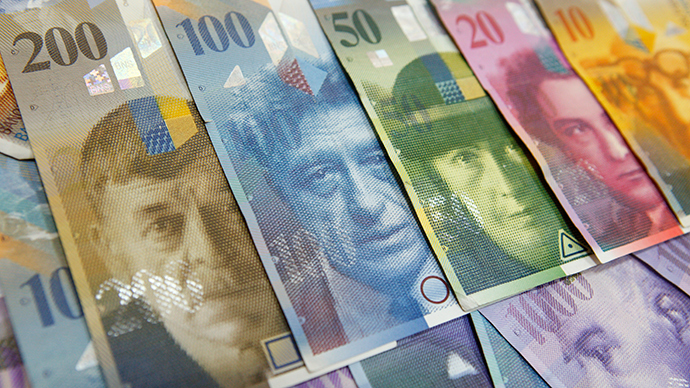
ZURICH: The ruble crises and tumult situation in the global financial markets have force the Swiss National Bank to switch a negative deposit rate for some deposits, as it seeks to avoid excessive growth of the national currency.

From January 2015 the Swiss National Bank will charge banks 0.25 percent on sight deposits exceeding a given exemption threshold set individually for each account holder, it said Thursday in a statement.


You might also like

Customs Today wishes its readers a very happy Eid Mubarak

26/05/2026
Pakistan's President Asif Ali Zardari is seen during a meeting with his Turkish counterpart Abdullah Gul (not pictured) in Istanbul November 1, 2011.   REUTERS/Murad Sezer

President Zardari rejects FBR demand for surety bonds before tax refunds

25/05/2026

At the moment the Swiss government tries to keep a currency ‘ceiling’ of SFr 1.2 against the euro and not let it go beyond that.

The decision comes as the ruble crisis in Russia and the collapse in oil prices have triggered a sharp correction in global financial market. The ruble turmoil is making people to rush and buy the Swiss franc as they see is at one of the world’s safest harbors for investment.

The SNB said it hoped the move would drive short-term rates negative, saying that it was “expanding the target range for the three-month Libor to -0.75 per cent to 0.25 per cent.”

Introducing a negative interest rate means customers will be charged by the bank for parking their cash instead of earning interest on money left there.

The Swiss National Bank first introduced the ceiling in the middle of the eurozone crisis, which caused mass inflows into the country’s market, and caused a dramatic appreciation in the Swiss franc.




Tags: financial marketsruble crises

Related Stories

Customs Today wishes its readers a very happy Eid Mubarak

byCT Report
26/05/2026

Pakistan's President Asif Ali Zardari is seen during a meeting with his Turkish counterpart Abdullah Gul (not pictured) in Istanbul November 1, 2011.   REUTERS/Murad Sezer

President Zardari rejects FBR demand for surety bonds before tax refunds

byCT Report
25/05/2026

ISLAMABAD: President Asif Ali Zardari has dismissed a representation filed by the Federal Board of Revenue (FBR) against the Federal...

Petrol pump owners demand end to weekly fuel price changes

byCT Report
25/05/2026

LAHORE: The All Pakistan Petrol Pump Owners Association has expressed strong reservations about the existing mechanism for determining petroleum product...

LCCI President Faheem Sehgal seeks extension in business hours

byCT Report
25/05/2026

LAHORE: Lahore Chamber of Commerce and Industry (LCCI) has called on the government to continue relaxed business hours beyond June...

Next Post

Hong Kong start mixed, Hang Seng up 1.3%, Shanghai Composite slips 0.2%

  • Terms and Conditions
  • Disclaimer

© 2011 Customs Today -World's first newspaper on customs. Customs Today.

No Result
View All Result
  • Transfers and Postings
  • Latest News
  • Karachi
  • Islamabad
  • Lahore
  • National
  • Chambers & Associations
  • Business
  • About Us

© 2011 Customs Today -World's first newspaper on customs. Customs Today.