

LONDON: Researchers from China’s Anhui Jianzhu University have developed a synthetic substance that mimics coral’s ability to collect harmful heavy metals from water. Tests on the effectiveness of the aluminum oxide structure have so far shown promising results.
Humanity’s industrial processes have a huge impact on the world’s oceans, releasing harmful substances such as mercury, arsenic and lead into the water. Once present in the aquatic environment, these substances are absorbed into plant and animal life, eventually making their way into human food sources.
It’s a bigger problem than you might think. According to the World Health Organisation, anything up to 17 in every thousand children living in surveyed fishing communities showed signs of negative cognitive impacts caused by eating fish containing too much mercury.
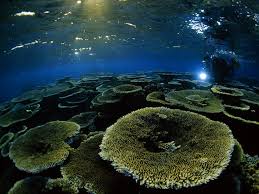
Of course, humans aren’t the only species feeling the negative impacts here – far from it. Coral for example is extremely efficient at absorbing these substances and even low levels of heavy metals can prove fatal. While this attribute is unfortunate for the coral, it did give the researchers at Anhui Jianhu University an idea.
The researchers worked with aluminum oxide, a substance that’s proved effective at removing pollutants in the past, and optimized its structure for the task at hand. They formed aluminum oxide nanoplates into a coral-like curls in order to mimic the behavior of organic coral.
The team put its new material to the test in an experiment to remove mercury from water, and found that the specially structured aluminum oxide was around two and a half times as effective at collecting the pollutant than traditionally structured nanoparticles.

Karachi Port sets 138-year cargo handling record
KARACHI: Pakistan's maritime sector has achieved a major milestone as Karachi Port set a new record in its 138-year history...