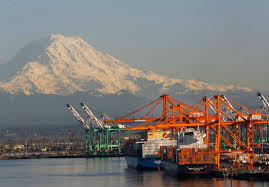
CALIFORNIA: The stacks of cargo containers accumulated during a four-month-long West Coast cargo handling slowdown nearly cleared out, the ports of Tacoma and Seattle are looking for business originally destined for Southern California ports still buried in the container backlog.
“We’re letting the market know that we’re open for business,” said Don Esterbrook, the Port of Tacoma’s chief operating officer, at a meeting of the two ports’ commissions at Sea-Tac Airport Tuesday morning.
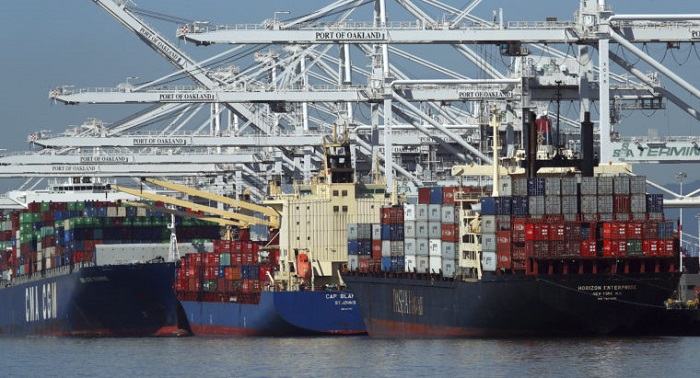

Esterbrook said the pace of loading and unloading ships at the two ports has nearly returned to normal.
“We’ve still got a little way to go,” said Esterbrook. “We’ve got five ships remaining at anchor. That’s down from 15,” he said.
The two ports’ marketing teams are hoping to take advantage of the relatively swift recovery from the slowdown by enticing shipping lines to divert more cargo to the Pacific Northwest while Southern California ports remain congested, Esterbrook said.
The Southern California ports of Long Beach and Los Angeles, the nation’s largest, have said it may be months before operations there return to normal.
The two ports of Seattle and Tacoma are forming an alliance to jointly operate their container terminals in hopes of regaining market share.
Esterbrook told the joint commissions that some issues remain at the two ports, specifically terminal gate overcrowding and a shortage of rail cars, but those problems are being swiftly resolved.
The backup occurred when the Longshore Union and the Pacific Maritime Association couldn’t reach a long-term labor deal by the end of October. They had operated since July 1 without a contract. At its peak, the slowdown cut activity by some 60 percent on the docks.
The PMA represents shipping lines and terminals up and down the West Coast. The two sides, with federal help, reached a tentative deal late last month, and the pace of loading and unloading ships returned to pre-slowdown levels. Longshore workers will vote on the proposed pact in mid-April.
He suggested, for instance, a temporary suspension of strict air pollution requirements for truck operators serving to port to enable more containers to be hauled away. He also recommended giving terminal operators a one-time break on their contracts which impose more rent when they handle more containers.
Tacoma Port Commissioner and longshore worker Dick Marzano said the two ports will have to show concrete improvements in productivity and reliability to win back business lost during the crisis.