Customs Today
  • Home
  • Islamabad
  • Karachi
  • Lahore
  • National
  • Transfers and Postings
  • Chambers & Associations
  • Business
No Result
View All Result
Customs Today
  • Home
  • Islamabad
  • Karachi
  • Lahore
  • National
  • Transfers and Postings
  • Chambers & Associations
  • Business
No Result
View All Result
Customs Today
No Result
View All Result
Home International Customs

Taxing religious foundations: Iran to further generate $377 million

byMonitoring Report
05/12/2014
in International Customs
Share on FacebookShare on Twitter

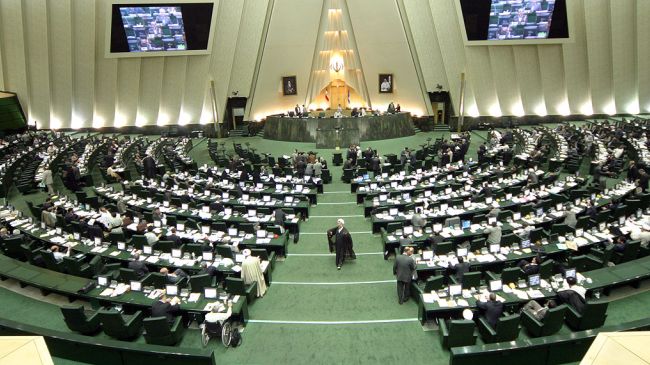
TEHRAN: Iran’s parliament has adopted a law to tax religious foundations and military-linked companies, a first for the Islamic republic that could generate hundreds of millions of dollars in revenues, media reported Thursday.

The government is seeking to tighten spending and raise taxes to offset the negative effect on the state budget of sharply lower oil prices and international sanctions.


You might also like

lamic banking assets reach Rs14.47 trillion, sector share rises to 23%

07/03/2026

Shippers see temporary lull in exports

05/02/2020

The revenue resulting from the new law could amount to 10 billion rials (more than $377 million at the official rate/307 million euros), said the budget committee’s Mousalreza Servati, cited by the reformist Shargh newspaper. The money raised from the foundations and army-linked businesses that control large parts of the economy would go towards building schools in disadvantaged areas, a lawmaker was cited as saying. Media outlets said the new legislation refers in particular to the Astan Qods Razavi Foundation, which manages the shrine of Imam Reza, the eighth Shiite imam, in the north-eastern city of Mashhad, which draws millions of pilgrims each year.

It also mentions EIKO, which the United States says is a network of 40 companies run by the office of the supreme leader in control of billions of dollars in investments. “Given the fall in the country’s oil revenues and the continuation of this trend for next year, it is necessary to obtain alternative income,” Gholam-Ali Jafarzadeh Imenabadi, another budget committee member, was quoted as saying. But the law is unlikely to take effect, according to MP Mohammad Reza Pourebrahimi, cited by the Tabnak news website.


Related Stories

lamic banking assets reach Rs14.47 trillion, sector share rises to 23%

byCT Report
07/03/2026

KARACHI: Pakistan’s Islamic banking sector expanded during 2025, increasing its share in the country’s financial system with assets reaching nearly...

Shippers see temporary lull in exports

byadmin
05/02/2020

Shippers expect the coronavirus outbreak to have the greatest effect on farm product exports, notably fresh fruits and vegetables, with...

Toyota Motor Corp. employees work on the Crown vehicle production line at the company's Motomachi plant in Toyota City, Aichi, Japan, on Thursday, July 26, 2018. Toyota may stop importing some models into the U.S. if President Donald Trump raises vehicle tariffs, while other cars and trucks in showrooms will get more expensive, according to the automaker’s North American chief. Photographer: Shiho Fukada/Bloomberg

Toyota SA to invest over R4 billion in car assembly and parts

byadmin
05/02/2020

Toyota SA Motors (TSAM) has announced a R4.28bn investment in local vehicle assembly and parts supply. Speaking at the company’s...

Over 80 Kilos Cocaine Found On Dutch Plane In Argentina; Three Dutch Arrested

byadmin
05/02/2020

More than 80 kilograms of cocaine was found on a Martinair Cargo plane in Argentina. Seven men, three of whom...

Next Post

Samsung Galaxy S3 owners awaiting OS update can install Android 5.0 Lollipop

  • Terms and Conditions
  • Disclaimer

© 2011 Customs Today -World's first newspaper on customs. Customs Today.

No Result
View All Result
  • Transfers and Postings
  • Latest News
  • Karachi
  • Islamabad
  • Lahore
  • National
  • Chambers & Associations
  • Business
  • About Us

© 2011 Customs Today -World's first newspaper on customs. Customs Today.