Customs Today
  • Home
  • Islamabad
  • Karachi
  • Lahore
  • National
  • Transfers and Postings
  • Chambers & Associations
  • Business
No Result
View All Result
Customs Today
  • Home
  • Islamabad
  • Karachi
  • Lahore
  • National
  • Transfers and Postings
  • Chambers & Associations
  • Business
No Result
View All Result
Customs Today
No Result
View All Result
Home Business

TCP awards tenders for import of 415000 tonnes urea

byCustoms Today Report
29/10/2014
in Business
Share on FacebookShare on Twitter

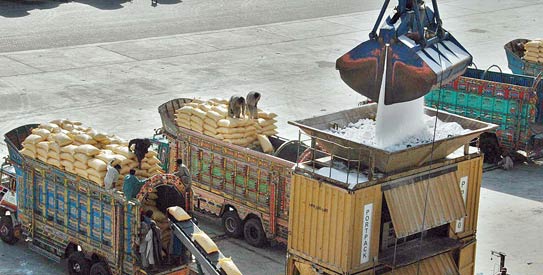
KARACHI: Trading Corporation of Pakistan (TCP) has issued four urea import tenders totaling 415,000 tonnes to overcome the shortage during the current Rabi season.

TCP has issued three tenders for 105,000 tonnes of prilled or granular urea each, with the first to close on November 10, the second on November 11 and the third on November 12, they added. A fourth tender for 100,000 tones will close on November 13.


You might also like

Nepra cuts electricity price by Rs1.98 per unit under quarterly adjustment

09/06/2026

Pak-Italy trade witnesses over 18pc surplus in 10 months

08/06/2026

TCP has asked the minimum quantity offered is 105,000 tonnes and that offer validity under each tender lasts 24 hours. Shipment of the tones is expected to be made by December 7 for the first tender, and then by December 8 and 9 for the second two.

The imported urea is expected to land at ports of Pakistan within one-month from the date of opening of letter of credit (L/C).

The government has already approved the import of 185,000 tonnes of urea from Saudi Arabia under a $100 million credit facility from the Saudi Fund for Development.

Urea import tenders from Pakistan had been widely expected in the market as the country was expecting to see a 600,000-tonne shortfall in supply for the September 2014-April 2015 Rabi season as Pakistan urea production has been hit due to gas shortages. Pakistan’s main Rabi crop is wheat.

An official of TCP said Economic Coordination Committee (ECC) of the Cabinet has approved the imports after National Fertilizer Marketing Limited (NFML) submitted a detailed report on shortage of urea during Rabi.

Traders expect said the import would cost Pakistan $373 per ton. This cost would go up with the addition of five percent freight, port and other charges, and 17 percent General Sales Tax (GST).

The farmers would be needed a total of 3.10 million tonnes urea during the current Rabi crops while only 2.50 million tonnes of urea will be available at the beginning of the season.

The available 2.50 million tonnes urea included domestic production of 2.380 million tonnes and carryover of 120,000 tonnes from the outgoing Kharif season (April-2014 to September-2014).


 

Tags: importimporters and tradersTCPtenderUrea

Related Stories

Nepra cuts electricity price by Rs1.98 per unit under quarterly adjustment

byCT Report
09/06/2026

ISLAMABAD: Electricity prices across Pakistan have been reduced by Rs1.98 per unit, according to a notification issued by the National...

Pak-Italy trade witnesses over 18pc surplus in 10 months

byCT Report
08/06/2026

ISLAMABAD, Jun 8 (APP): Pakistan’s goods and services trade with Italy witnessed a surplus of 18.41 percent during the first...

Pakistan cuts petrol price by Rs4 per litre

byCT Report
06/06/2026

ISLAMABAD: Pakistan has announced a reduction in petrol prices in its latest weekly fuel price review, providing some relief to...

Govt likely to cut petrol price, diesel may get costlier

byCT Report
05/06/2026

ISLAMABAD: The federal government is expected to revise petroleum prices later today amid reports of a whooping increase in high...

Next Post

Hang Seng Index advances 1.4%, Shanghai Composite up 1.4%

  • Terms and Conditions
  • Disclaimer

© 2011 Customs Today -World's first newspaper on customs. Customs Today.

No Result
View All Result
  • Transfers and Postings
  • Latest News
  • Karachi
  • Islamabad
  • Lahore
  • National
  • Chambers & Associations
  • Business
  • About Us

© 2011 Customs Today -World's first newspaper on customs. Customs Today.