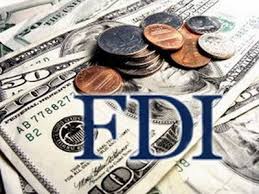
BANGKOK: Foreign direct investment plunged about 90% on the year to 11.8 billion baht ($341 million) for the January-June half, central bank data shows — a level not seen since 2011, when severe flooding caused heavy damage.
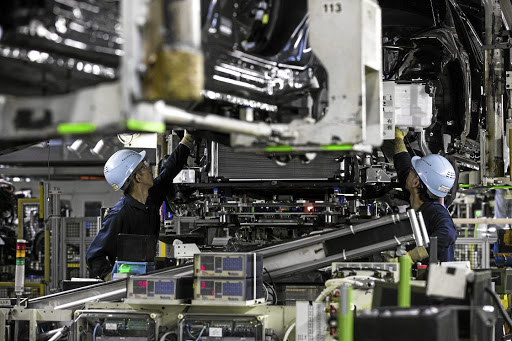
The drop owes largely to uncertainty over the Thai economy and the completion of the recent round of capacity expansion, mainly by the auto industry. Domestic demand remains depressed, while the global economy’s slow recovery has created a tough environment for exports. Factories of six major Japanese automakers are running at only around 70% capacity.

The Bank of Thailand’s figure also accounts for equity outflows, including a French mass retailer’s sale of roughly $3.5 billion in shares of a Thai retailer early this year. As such, it does not reflect the true state of the economy, the central bank argued. But investment still looks sluggish even after taking this into account.
The government has sought to steer the nation away from labor-intensive industries and attract companies in new sectors. It retooled investment incentives last year to promote development of industrial clusters, targeting 10 fields requiring advanced technology. The measures included up to eight years of tax breaks for businesses in such areas as electric vehicles, aerospace and robotics.
Applications for investment are growing in value terms. But a government dispute over tax assessment methods has created confusion, and the planned transfer of power from a military junta to a civilian government with next year’s elections is expected to fuel uncertainty. The Thai economic outlook will hinge on whether investment picks up.