BUDAPEST: Hungarian Prime Minister Viktor Orban, centre, early this month formally inaugurated Apollo Tyres’ sixth global tyre-manufacturing unit and the second one in Europe. Also present were Onkar S Kanwar, right, chairman, and Neeraj Kanwar, left, vice chairman and managing director, of Apollo Tyres.
The company’s board of directors and senior management were also present on the occasion.

Located less than 100 kilometres from the capital Budapest, this is Apollo Tyres’ first greenfield facility outside India, the company said in a statement.
Apollo Tyres (Thailand) Co, which was founded in mid-2013 as a sales and marketing office for the Indian company in the Kingdom as well as its regional headquarters in the Asean region, imports tyres from India and the Netherlands, and is planning to import its Vredestein passenger-car tyres from the new Hungarian production facility. Vredestein is the company’s premium brand for the luxury-car segment.
Apollo Tyres is approaching a 5-per-cent share of Thailand’s replacement-tyre market and carries a full range of passenger-car tyres, commercial-vehicle radial tyres for trucks and buses, and agricultural tyres as well as industrial tyres.
The company aims to double its market share in Thailand by 2020, through expansion of distribution and retail channels as well as brand development efforts by the company.
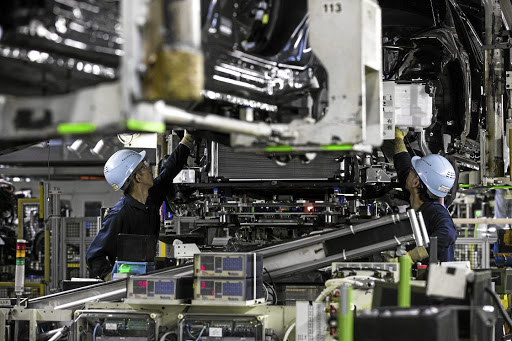
The new facility in Hungary is a highly automated plant with use of IT-driven systems and robotics, it employs young and skilled associates on the shop floor, mostly hired locally.
Kanwar said during the April 7 event: “With this inauguration today of our Hungary greenfield facility, we have crossed another milestone in our global growth journey. This facility will help us further increase our presence and market share in Europe. From being a replacement-market-focused company in Europe, we [will] soon be starting supplies of our tyres to all the leading [automakers] in Europe.”
Built over 72 hectares, construction began in April 2015. The company is investing 475 million euros (Bt17.7 billion) in this facility. The final capacity at the end of Phase I will be 5.5 million passenger-car and light-truck (PCLT) tyres and 675,000 commercial-vehicle tyres.
This facility will complement Apollo Tyres’ existing facility in the Netherlands, and will produce both Apollo and Vredestein brand tyres for the European market.
The inauguration also marks 40 years that the company has been in the business of manufacturing and selling of tyres. India’s leading tyre manufacturer started out in the mid-1970s from a single plant in the rubber-producing state of Kerala in India. It started with making only truck tyres, and became a market leader in the segment, and then entered other product segments.
The company ventured into passenger-vehicle tyres relatively recently (in the 2000s), but quickly became the largest producer of these tyres in India; similarly, it entered the truck-bus radial segment around 2006, and already has the largest capacity in this segment in India.
Apollo Tyres was the first Indian tyre major to make an international acquisition in 2006, followed by a second one in 2009, was also the first one to start selling India-made products in the European market. The company says it is now poised to be a major force in key international markets on the back of its significant investments in research, development and manufacturing, supported by its brand-building activities.