Customs Today
  • Home
  • Islamabad
  • Karachi
  • Lahore
  • National
  • Transfers and Postings
  • Chambers & Associations
  • Business
No Result
View All Result
Customs Today
  • Home
  • Islamabad
  • Karachi
  • Lahore
  • National
  • Transfers and Postings
  • Chambers & Associations
  • Business
No Result
View All Result
Customs Today
No Result
View All Result
Home International Customs Brazil

The US-China trade war and Brazil

byadmin
26/10/2018
in Brazil
Share on FacebookShare on Twitter

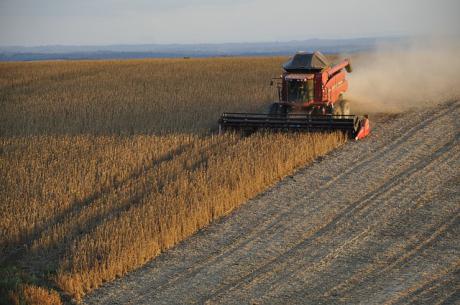
For years, Arnaldo Carneiro stuck to his master plan to contain deforestation in Brazil. Carneiro’s studies demonstrated the complicity of importers of Brazilian soybeans in the degradation of the environment.

He implored them to purchase only from farmers who could guarantee they did not clear land for cultivation.

You might also like

Mercedes-Benz sees Brazil truck sales up 18% in 2020

03/02/2020

Chinese beef importers seek to renegotiate prices for Brazilian shipments: report

30/01/2020

The strategy always worked better in Europe. In 2015, seven European countries signed the Amsterdam Declaration committing to support private sector initiatives against deforestation in their production chains.

“Europe is a slightly more conscious market”, says Carneiro, who directs the NGO Global Canopy. “They are concerned with impacts on the front line”.

Now, however, Carneiro’s strategy has suffered a big setback that has renewed concerns for Brazilian forests: the US-China trade war.

As the world’s two largest economies began to impose tit-for-tat tariffs on a range of imports in March this year, China hit US soybeans – a heavily traded commodity – with a punitive 25% levy. Since then, Chinese demand for Brazilian soy has spiked.

The trade war has also kick-started a game of musical chairs between soybean purchasers and producers. Chinese buyers have increasingly switched to Brazil to avoid the high tariffs imposed on US products.

Meanwhile, European dealers have flocked to the US as prices slumped for their soybeans, which flooded the market after losing eager Chinese customers.

Historically, China has accounted for approximately one-third of US soybean consumption. Chinese people have increasingly stronger purchasing power and want to eat better.

Soybeans play an important part in food production since they are fed to Chinese pigs.

In June this year, 37% of soy imported to Europe came from the US, an explosive increase compared to 9% last year.


Related Stories

Mercedes-Benz sees Brazil truck sales up 18% in 2020

byadmin
03/02/2020

SAO BERNARDO DO CAMPO, Brazil: The Brazilian unit of German automaker Mercedes-Benz (DAIGn.DE) expects overall domestic truck sales to rise...

Chinese beef importers seek to renegotiate prices for Brazilian shipments: report

byadmin
30/01/2020

Chinese beef importers are seeking to renegotiate prices previously agreed when they closed deals to buy dozens of shipments from...

Brazil central bank monitoring impact of Iran-US conflict

byadmin
13/01/2020

BRASILIA: Brazil’s central bank chief, Roberto Campos, said that policymakers are monitoring tensions between Iran and the United States to...

Brazil fines Facebook $1.6 million in Cambridge Analytica case

byadmin
02/01/2020

Brazil’s government imposed a 6.6 million real ($1.6 million) fine on Facebook Inc. and its local unit for their role...

Next Post

AMP sells off majority of NZ operations after scandals

  • Terms and Conditions
  • Disclaimer

© 2011 Customs Today -World's first newspaper on customs. Customs Today.

No Result
View All Result
  • Transfers and Postings
  • Latest News
  • Karachi
  • Islamabad
  • Lahore
  • National
  • Chambers & Associations
  • Business
  • About Us

© 2011 Customs Today -World's first newspaper on customs. Customs Today.