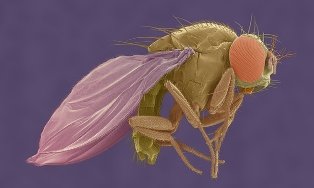
MEXICO: Tiny biological compasses made from clumps of protein may help scores of animals, and potentially even humans, to find their way around, researchers say.
Scientists discovered the minuscule magnetic field sensors in fruit flies, but found that the same protein structures appeared in retinal cells in pigeons’ eyes. They can also form in butterfly, rat, whale and human cells.


The rod-like compasses align themselves with Earth’s geomagnetic field lines, leading researchers to propose that when they move, they act on neighbouring cell structures that feed information into the nervous system to create a broader direction-sensing system.
Professor Can Xie, who led the work at Peking University, said the compass might serve as a “universal mechanism for animal magnetoreception,” referring to the ability of a range of animals from butterflies and lobsters to bats and birds, to navigate with help from Earth’s magnetic field.
Whether the compasses have any bearing on human navigation is unknown, but the Peking team is investigating the possibility. “Human sense of direction is complicated,” said Xie. “However, I believe that magnetic sense plays a key role in explaining why some people have a good sense of direction.”
The idea that animals could sense Earth’s magnetic field was once widely dismissed, but the ability is now well established, at least among some species. The greatest mystery that remains is how the sensing is done.