

Customs Today
  • Home
  • Islamabad
  • Karachi
  • Lahore
  • National
  • Transfers and Postings
  • Chambers & Associations
  • Business
No Result
View All Result
Customs Today
  • Home
  • Islamabad
  • Karachi
  • Lahore
  • National
  • Transfers and Postings
  • Chambers & Associations
  • Business
No Result
View All Result
Customs Today
No Result
View All Result
Home Science & Technology Science

Traces of opal on Martian meteorite indicate signs of life on Mars

byCustoms Today Report
10/07/2015
in Science, Science & Technology
Share on FacebookShare on Twitter

You might also like

Tesla driverless system to use updated radar technology

12/09/2016

Apple to develop its own self-driving technology

10/09/2016

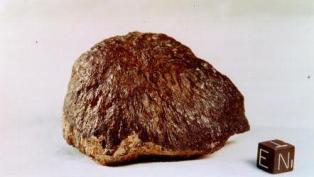
NEW YORK: Want another piece of evidence to put in the truther “life on Mars” vault? Traces of opal have been found on a Martian meteorite — more specifically, the infamous Nakhla meteorite – which may indicate the existence of microbial life on Mars and which areas to search for them.
A team of astronomers from the University of Glasgow, the Natural History Museum in London, the Center for Microscopy and Spectroscopy in Germany, and the Scottish Universities Environtmental Research Center detailed their findings in Meteoritrics & Planetary Science, where they state that remnants of opal-A (also known as a “fire opal,” a variation of the semi-precious stone with a red and orange cast) were detected with the help of a scanning electron microscope.
Nakhla’s gem vestiges are theorized to have been caused by an admixture of H2O and silica (the dioxide form of silicon) native to the meteorite. This lends itself to the idea that not only did hot springs exist at one point on Mars, which is key to how opals are formed, but that microbial life, which thrives in the environment that hot springs create, could have also been present.
“[We] know that on Earth opals like these are often formed in and around hot springs,” wrote Martin Lee, a professor at the Environmental Research Center and the lead scientist on the project. “Microbial life thrives in these conditions, and opal can trap and preserve these microbes for millions of years. If Martian microbes existed, it’s possible they too may be preserved in opal deposits on the surface of Mars.”

Related Stories

Tesla driverless system to use updated radar technology

byCT Report
12/09/2016

WASHINGTON: Electric carmaker Tesla announced Sunday it was upgrading its Autopilot software to use more advanced radar technology. In a...

Apple to develop its own self-driving technology

byCT Report
10/09/2016

SAN FRANCISCO: Apple may not become an automaker, but it still wants to develop its own self-driving technology. The iPhone-maker's...

NASA spots slowest known magnetar

byCT Report
10/09/2016

WASHINGTON: Astronomers have found evidence of a magnetar - magnetised neutron star - that spins much slower than the slowest...

‘YouTubers’ outshining old-school television

byCT Report
09/08/2016

SAN FRANCISCO: A media revolution is taking place, and most people over 35 years of age aren’t tuned in. Millennial...

Next Post

Bangladesh earns $124.73b by exporting readymade garments

  • Terms and Conditions
  • Disclaimer

© 2011 Customs Today -World's first newspaper on customs. Customs Today.

No Result
View All Result
  • Transfers and Postings
  • Latest News
  • Karachi
  • Islamabad
  • Lahore
  • National
  • Chambers & Associations
  • Business
  • About Us

© 2011 Customs Today -World's first newspaper on customs. Customs Today.