Effective implementation of reforms to trade facilitation in developing countries can catalyse progress towards meeting development goals, attendees at an UNCTAD expert meeting heard on 7 May.
The seventh session of the UNCTAD expert meeting on transport, trade logistics and trade facilitation is taking place from 7 to 9 May at the UN’s European headquarters in Geneva, Switzerland.


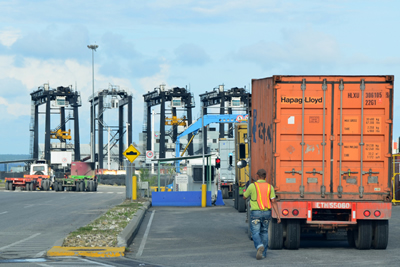
The meeting focuses on the reforms governments should put in place to ease the flow of goods across borders, many of which fall under the World Trade Organization (WTO) Agreement on Trade Facilitation.
More than 140 WTO members have ratified the agreement – which entered into force in February 2017 – and are implementing its provisions, in many cases with the assistance of international organizations, including UNCTAD.
“Implementation of trade facilitation reforms will boost international trade and significantly contribute to sustainable development,” said Shamika Sirimanne, director of UNCTAD’s division on technology and logistics.
Ms. Sirimanne said the reforms would not only improve a country’s competitiveness and the effectiveness of border agencies, but also create an environment to strengthen governance and to formalize the informal sector.
They would also help to generate employment in trade support services and infrastructure, to improve transparency in trade transactions, and to reduce the negative environmental impacts of international trade.
Ms. Sirimanne also outlined UNCTAD’s work aimed at assisting developing countries to implement the reforms.
They include the UNCTAD Automated System for Customs Data (ASYCUDA), an integrated customs management system for international trade and transport operations. It is UNCTAD’s largest technical cooperation programme.
“ASYCUDA has automated customs clearance procedures of more than half of the world’s countries,” Ms. Sirimanne said. “Through ASYCUDA, many countries have vastly increased their revenues, giving them more resources to fund development.”
For example, in Afghanistan, annual revenues jumped from $50 million in 2005 to $1 billion in 2018, as a result of the automation of customs procedures.
And the Solomon Islands collected more than $1 billion in annual import taxes in 2017 for the first time in history three years after installing ASYCUDA.?
Chicken and egg
“Trade facilitation and development are a chicken and egg relationship,” said Jan Hoffmann, chief of UNCTAD’s trade and logistics branch.
“While trade facilitation is good for a country’s development, you also need certain development capacity – human, institutional, technological – to implement the trade facilitation reforms,” Mr. Hoffmann said.
Trade facilitation assists in simplifying, standardizing, harmonizing and modernizing international cross-border trade, thereby increasing trade volumes and making international trade faster and cheaper, as well as more accessible for small and medium-sized traders.
Mr. Hoffmann said implementing the provisions of the WTO agreement on trade facilitation would also help strengthen the multilateral system, which was under threat.
‘Sunlight is the best disinfectant’
Trade facilitation reforms would also improve governance, said Saint Lucia’s minister of commerce, Bradley Felix.
“Sunlight is the best disinfectant,” Mr. Felix said. “Trade facilitation provides the necessary sunlight to ensure public and private sector actors work within the rules.”
Mr. Felix said trade facilitation reforms could enable better support to micro, small and medium enterprises to tap into opportunities offered by international trade.
He said those enterprises were key drivers of economic activity and creators of employment in developing countries yet were largely underrepresented in international trade.