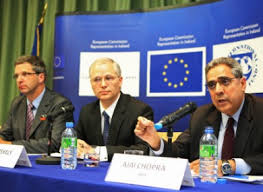
DUBLIN: The Government’s €1.3 billion of tax cuts and spending increases in the 2017 budget have left its finances at risk at a time when the economy is facing increasing uncertainty, especially in the face of Brexit, members of the troika bailout team have warned.
In a statement issued after the conclusion of the troika’s sixth review of how Ireland is faring after the bailout ended in 2013, the European Central Bank and European Commission said: “The 2017 budget aims to exhaust the available fiscal space and little has been done to broaden the tax base in this budget, leaving the public finances vulnerable to shocks.”
The ECB and commission also criticised how the Government has used better-than-expected, but “volatile”, tax proceeds to fund additional spending. The statement was issued yesterday afternoon, shortly before the Department of Finance revealed that company tax receipts for the first 11 months of the year, at €7.06 billion, were running more than 16 per cent above its forecast.
However, the International Monetary Fund (IMF) said in a separate statement that the “moderate” budgetary easing in 2017 “strikes a reasonable balance between advancing deficit reduction and addressing public expectations for a growth dividend”.
Still, it said Ireland’s open economy leaves it open to Brexit-related risks as well as sustained low growth in Europe, as well as the impact of rising “anti-globalisation sentiment” across the US and Europe.
The European members of the troika said that Ireland should use such “windfall gains” to accelerate the reduction of its budget deficit and debt level.
The comments echo those from the Fiscal Advisory Council earlier in the week, when it said that using unexpected tax revenue for difficult-to-reverse spending increases was “especially risky” at a time when the economy is slowing.
Further current spending increases and tax cuts could narrow the scope for public investment in infrastructure, making it difficult to address bottlenecks and boost the long-term productive capacity of the economy, they said.