Customs Today
  • Home
  • Islamabad
  • Karachi
  • Lahore
  • National
  • Transfers and Postings
  • Chambers & Associations
  • Business
No Result
View All Result
Customs Today
  • Home
  • Islamabad
  • Karachi
  • Lahore
  • National
  • Transfers and Postings
  • Chambers & Associations
  • Business
No Result
View All Result
Customs Today
No Result
View All Result
Home International Customs

U.S Customs seizes cache of counterfeit wearables

byCT Report
13/01/2016
in International Customs
Share on FacebookShare on Twitter

NEW YORK: Though it doesn’t happen too often if you use a reputable service, ordering electronics online often comes with the risk of getting a counterfeit product. In some cases, the counterfeit nature of the product is immediately apparent and disappointing; other times it is done well enough to go undetected unless something catastrophic happens. The best way to avoid having those products in the marketplace, of course, is to catch them as they arrive, which is exactly what happened recently in Philadelphia.

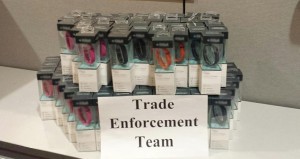
In a statement today, the U.S. Customs and Border Patrol announced it confiscated a cache of smart wristbands with a street value of $35,000 USD. The agency released an image of the counterfeits with the faux branding blurred out, and while it didn’t name the company behind copied, it did reveal they were fitness wearables and that the real equivalent would have a value of about $100 each.


You might also like

lamic banking assets reach Rs14.47 trillion, sector share rises to 23%

07/03/2026

Shippers see temporary lull in exports

05/02/2020

Those details coupled with a careful look reveals they were likely Fitbit Flex wristbands, which retail for about $99 USD and are used for fitness purposes. The shipment arrived in Philadelphia, Pennsylvania, and originated from Hong Kong. The shipment arrived on December 4, but wasn’t confirmed to be counterfeit until January 4.

Counterfeit products are not only bad for the company being ripped off and the economy general, but can also be a safety or health hazard to the unsuspecting public. Most recently, for example, counterfeit hoverboards have had issues with their batteries exploding or catching fire while charging, in some cases causing extensive property damage.


Related Stories

lamic banking assets reach Rs14.47 trillion, sector share rises to 23%

byCT Report
07/03/2026

KARACHI: Pakistan’s Islamic banking sector expanded during 2025, increasing its share in the country’s financial system with assets reaching nearly...

Shippers see temporary lull in exports

byadmin
05/02/2020

Shippers expect the coronavirus outbreak to have the greatest effect on farm product exports, notably fresh fruits and vegetables, with...

Toyota Motor Corp. employees work on the Crown vehicle production line at the company's Motomachi plant in Toyota City, Aichi, Japan, on Thursday, July 26, 2018. Toyota may stop importing some models into the U.S. if President Donald Trump raises vehicle tariffs, while other cars and trucks in showrooms will get more expensive, according to the automaker’s North American chief. Photographer: Shiho Fukada/Bloomberg

Toyota SA to invest over R4 billion in car assembly and parts

byadmin
05/02/2020

Toyota SA Motors (TSAM) has announced a R4.28bn investment in local vehicle assembly and parts supply. Speaking at the company’s...

Over 80 Kilos Cocaine Found On Dutch Plane In Argentina; Three Dutch Arrested

byadmin
05/02/2020

More than 80 kilograms of cocaine was found on a Martinair Cargo plane in Argentina. Seven men, three of whom...

Next Post

Govt determined to promote trade in country: Dastgir

  • Terms and Conditions
  • Disclaimer

© 2011 Customs Today -World's first newspaper on customs. Customs Today.

No Result
View All Result
  • Transfers and Postings
  • Latest News
  • Karachi
  • Islamabad
  • Lahore
  • National
  • Chambers & Associations
  • Business
  • About Us

© 2011 Customs Today -World's first newspaper on customs. Customs Today.