
CAPETOWN: The head of one of the fastest-growing ports said the days of U.S. ports gateways unwilling or unable to invest hundreds of millions of dollars in infrastructure to become a top 10 port are limited. Without major investments in deeper harbors, larger terminals, taller cranes and extensive rail and highway infrastructure, ports will literally miss the boat in the era of big ships, said Jim Newsome, president and CEO of the South Carolina Ports Authority.
“If you are not a top 10 container port, you will not stay in the container business in the future,” Newsome said Monday in his annual state-of-the port address
Ocean carriers, by concentrating their vessel orders on mega-ships with capacities ranging from 7,500 to 20,000 twenty-foot-equivalent units, are sending a clear message to ports in the major east-west trade lanes that gateways unable to physically accommodate big ships, turn them quickly at berth, and move the containers efficiently to inland destinations through excellent road and railway connectors will start to lose cargo to top-10 ports.
“This is a big-ship industry,” Newsome said. Charleston will invest $1 billion by 2020 to remain a top-10 port, which means ports in the Southeast — the fastest-growing region of the country — that do not invest heavily in port and inland infrastructure will be fair game for cargo diversion. “Some ports can’t invest in big-ship terminals, so we’ll get some of that cargo,” he said.
Charleston, and its closest rival, Savannah, are investing heavily to be big-ship ready when the Panama Canal expansion project is completed next spring and vessels of about 13,000 TEU-capacity will be able to transit the canal on all-water services from Asia. Vessels much larger than that can easily transit the Suez Canal.
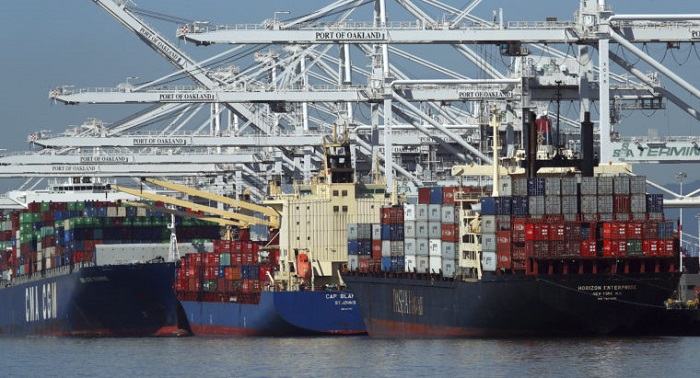
Shipping activity at Port Qasim on February 11
KARACHI: Three ships namely, Glen Canyon, Al-Salam- II and TSM Pollux carrying Containers, Gas oil and Palm oil were arranged...