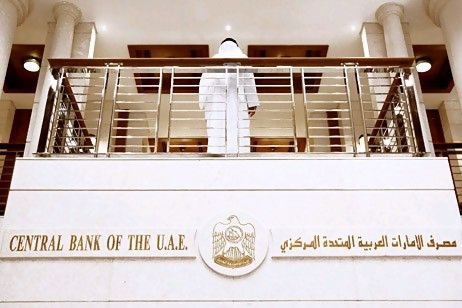
ABU DHABI: The Central Bank governor of the UAE said that the dirham’s long-standing peg to the US dollar is serving the country well, especially as the greenback strengthens.
“For us in the UAE we have benefited from the dollar, and we have no intention of doing anything to that because that is a very important link we have which provides stability to our economy,” said Mubarak Al Mansoori at the NBAD Global Financial Markets Forum in Abu Dhabi.


“It is a very interesting time and we in the UAE are fortunate that our currency is linked to the dollar,” he said. “We sell oil in dollars and our economy is an importing economy, so really a strong dollar helps the UAE.”
While the peg to the dollar compels the UAE and other Arabian Gulf states to follow US monetary policy despite any differences in economic fortunes, it has the benefit of tracking the world’s de facto currency – especially as the dollar firms against other currencies such as the euro and the yen, making imports from Europe and Japan cheaper.
The Bloomberg Dollar Spot Index, which tracks the currency against 10 of its major peers, gained 11 per cent last year, the biggest annual gain since 2004. The dollar advanced 14 per cent against the yen last year, a third straight annual gain. And it rose 12 per cent against the euro, the biggest advance since 2005.
The question of the peg arises whenever there are sharp drops in the price of crude, such as in 2009 and the most recent fall. Since June, the price of crude has dropped about 50 per cent, unsettling financial markets as investors worry about the effect of lower oil prices on the wider economy.
The UAE is the world’s eighth largest oil producer and the federal government uses revenues from crude exports to fund more than 60 per cent of its budget.
The central bank defended the dirham’s peg to the dollar in December amid the plunge in crude oil prices following media reports suggesting that the country would study the currency arrangement.
On the question of how the drop in oil prices will affect the UAE economy, Mr Al Mansoori said that while the country would not be untouched, it was increasingly less reliant on crude to fuel GDP growth. He added that sovereign wealth funds and banks remained cash-rich, suggesting that they would help the country weather any storm if oil prices remain low.
“I think it affects us of course, but in the UAE we are less exposed in terms of our GDP – which is about 20 per cent oil or even less with the decline,” said Mr Al Mansoori.
“So it will affect us but we have the financial capacity in terms of our sovereign wealth fund and our banks, which are fairly liquid,” he said. “We have very good capital adequacy ratios for our banks and for the last five years we have been using our provisions, so banks are in a very good position today.”
Not everyone, however, is as sanguine as the Central Bank governor. The rating agency Standard & Poor’s said in a report yesterday that banks in oil-exporting countries may face higher credit losses and lower profitability as economies grow at a slower pace. S&P singled out Nigeria, Bahrain, Oman and Brunei as countries with banks that may face the biggest challenges.