LONDON: New research has found that the ubiquitous bird species can learn in more or less the exact same way that children can.
Pigeon brains are excessively small. Around the size of an index finger – which is roughly twice the size of the brain of a US politician – its brain doesn’t seem to be capable of much more than directing the bird to scavenge for garbage, poop on your car, and then flap off to the next location. However, it turns out that these bird brains might not be so bird-brained after all thanks to recently conducted research.


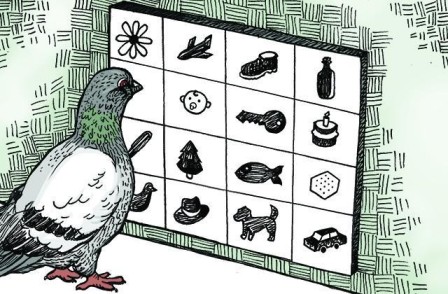
Scientists interested in learning more about the limits of pigeon intelligence designed a computerized version of a common test consisting of 128 black-and-white images of objects from a range of 16 different categories, including items like baby bottles, dogs, shoes, trees and other common everyday objects. The three pigeons in the study were tasked with pecking on a symbol that corresponded with the image if it wanted to get a treat; the other image, randomly chosen from one of the 15 other categories, gave the pigeon nothing.
By the end of the survey, the scientists had discovered that pigeons easily learned the task. Not only that but they were able to transfer the learning to four additional images from everyone of the 16 categories, helping to eliminate chance and demonstrate actual cognition and intelligence.
Of course, pigeons do have a reputation for at least a modicum of intelligence, as they have been used in many different scientific studies and also have been trained for tasks like spotting high-visibility orange life jackets for people tossed overboard. With the same associative ability of a child, these cooing little birds – sometimes derided as little more than rats with wings in urban environments – share associative qualities with other species like humans. Either that or that they are smarter than they look – and that they might even have one up on your precious little bundle of joy in the cognition department.