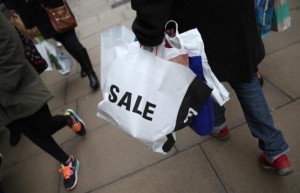
LONDON: British annual retail sales growth unexpectedly picked up speed in May after a bumper performance in April, boosted by a big increase in clothing sales from the month before, official figures showed here the other day.
Shoppers showed no sign of holding back in the run up to June’s referendum on European Union membership, which had previously knocked some measures of household sentiment.


Retail sales volumes rose 6.0 percent in May, the biggest annual rise since September, the Office for National Statistics said, above all forecasts in a Reuters poll of economists.
April’s retail sales growth was revised up to 5.2 percent from 4.3 percent, which the ONS said reflected an unusually high amount of data received late from stores.
Compared with a month earlier, sales volumes were up 0.9 percent, much less of a slowdown than economists had expected after monthly growth of 1.9 percent in April, which also reflected an upward revision.
Much of May’s strength was down to a big rebound in clothing sales, which unlike other sectors had performed relatively weakly in April when colder than normal weather dampened demand.
In May, clothing sales jumped by 4.3 percent on the month – the biggest rise in over two years – boosted by better weather.
Looking at sales in the three months to May – which smooths out some volatility in the data – volumes were up 1.5 percent on the previous three months, the biggest rise since November 2015.
Consumer spending has been a major driver of Britain’s economic expansion over the past three years, but household confidence has slipped to its weakest since late 2014 in the run-up to a June 23 referendum on European Union membership.
But earlier this month the British Retail Consortium reported that clothing sales strengthened in May as the weather improved after colder than usual weather in March and April, while the Confederation of British Industry also reported a small gain.
However the CBI said retailers expected a slowdown in June in the run-up to the referendum and had cut orders with suppliers by the biggest amount since 2009 – adding to signs that the EU vote may cause a lull in growth, regardless of the outcome.
British finance minister George Osborne said he would be forced to raise taxes and cut public spending if Britain voted to leave in order to plug a 30 billion pound hole in the public finances that a Brexit would open up.
This follows earlier warnings from him that the country risked tipping back into recession and the average household would be 4,300 pounds a year poorer by 2030 if the country left the EU.