

HONG KONG: British scientists have found a clever way to find the mass of certain stars, even if they’re alone out there in space.
Usually, when physicists, cosmologists, and mathematicians want to know the mass of a celestial object like a moon, planet ,or star, they use their relationship to other objects to calculate it. The gravitational pull between a planet and its moon, between two stars, or any other two celestial objects, is what determines its weight. Similarly, our “body weight” (more technically, our mass) is caused by the gravitational force between our bodies and the ground.
That same method can’t work when you’re measuring an object that doesn’t have a nearby neighbor. Once an object is virtually alone in space, its weight becomes unknowable. Or that was the case until now.
The mathematicians and scientists from the University of Southampton in the U.K. have announced that they can measure the mass of one celestial object – a young pulsar – even if it has no gravitational relationship with a nearby object. They published their findings on Friday in the journal Science Advances.
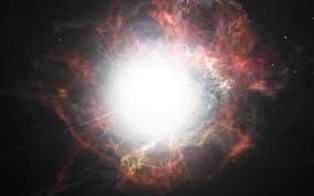
Pulsars are a special kind of rotating star that is born when a massive star (around four to eight times as big as our sun) explodes. That explosion causes a mess of star parts to shoot out, and the central part of the star collapses so intensely that it smashes the remaining electrons and protons together, forming a neutron star.

Karachi Port sets 138-year cargo handling record
KARACHI: Pakistan's maritime sector has achieved a major milestone as Karachi Port set a new record in its 138-year history...