
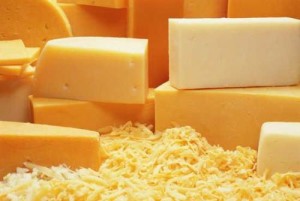
KIEV: The loss of cheese exports to the Russian Federation has had a far-reaching negative impact on Ukraine’s dairy industry, according to Ukraine: Dairy and Products Annual, an assessment by USDA’s Global Agricultural Information Network (GAIN). Processors have not been able to develop new markets, and significant currency devaluation negatively impacted domestic consumption and imports.
After some stabilization in 2012-13, milk production is expected to drop to the lowest level since Ukrainian Independence. The decrease is driven by low milk prices, making “household” producers unprofitable. “Industrial” milk production will remain stable, but is only responsible for a little more than 20% of total production.


Households are responsible for almost 80% of fluid milk production. Much “household” milk is processed into basic, cheap dairy products and sold on open-air markets without any statistical record. Households were not able to benefit from the devaluation despite the demand shift into the low price/low quality category of dairy products.
The quality of milk procured from households remained quite low. However, even industrial farms have a lot of room for improvement as production of “Extra Grade” milk (matching respective EU standard) is still quite low.
Due to the differing quality standards, the price gap between the price industrial farms received and households received in 2015 widened. This put already inefficient 1-2 cow households into financial difficulty and forced a reduction in the number of head. Milk prices for industrial producers were strong enough maintain current production levels.
The political and economic crisis in Ukraine caused a significant currency devaluation that brought milk prices to an all-time low. An especially strong shock was experienced by producers in February of 2015 after a short-term currency drop of 200¢ that brought real milk prices down to 9¢ U.S./kg for a couple of days.
Once significant, the Russian cheese market remains closed for Ukrainian products since August 2014. Unfortunately, no new export markets were discovered for Ukrainian product. Ukrainian cheese quality often needs improvement, and the type and taste of the product limits its distribution mainly to former Soviet Union countries.
Unable to produce and export cheese, many processors had no choice but to switch to butter and nonfat dry milk (NFDM) production. While exports of both products grew, low margins did not help to increase domestic milk price significantly.
The number of animals will continue to decline in the remaining months of 2015. Exports of beef to Russia in 2015 continued with a significant premium price paid for meat due to the lack of competition with EU and US. Small households were pushed by low milk price and pulled by premium beef price.
The situation is likely to change in 2016 as Russia introduces additional trade barriers for all Ukrainian agricultural products, canceling the few remaining trade preferences.
It is expected that 2016 will not bring major shocks as the political and economic situation appears to be stabilizing. However, any significant recovery in demand is not expected. USDA’s Global Agricultural Information Network (GAIN) provides regular assessments of international commodity and trade conditions.



