
Customs Today
  • Home
  • Islamabad
  • Karachi
  • Lahore
  • National
  • Transfers and Postings
  • Chambers & Associations
  • Business
No Result
View All Result
Customs Today
  • Home
  • Islamabad
  • Karachi
  • Lahore
  • National
  • Transfers and Postings
  • Chambers & Associations
  • Business
No Result
View All Result
Customs Today
No Result
View All Result
Home Science & Technology Science

UK’s Twinkle space mission to seek out Earth-like and other types of exoplanets

byCustoms Today Report
10/02/2015
in Science, Science & Technology
Share on FacebookShare on Twitter

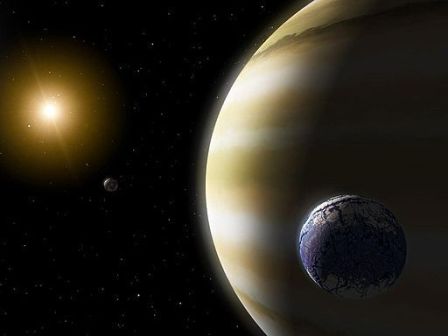
HONG KONG: Twinkle is a planned satellite that will seek out Earth-like and other types of exoplanets, examining their atmospheres and providing scientists with new insights into their formation, chemistry and evolution, says a team of scientists from University College London.

The satellite will be launched within the next four years, and the mission will be led by UCL and Surrey Satellite Technology Ltd., a University of Surrey spin-off company that is now fully owned by satellite maker EADS Astrium.Lead scientist, Prof Giovanna Tinetti of UCL, said:


You might also like

Tesla driverless system to use updated radar technology

12/09/2016

Apple to develop its own self-driving technology

10/09/2016

“Twinkle is a very ambitious mission. Nearly two thousand exoplanets – planets orbiting stars other than our Sun – have been discovered to date, but we know very little about these alien worlds. We can measure their mass, density and distance from their star.”

“From that, we can deduce that that some are freezing cold, some are so hot that they have molten surfaces, some are vast balls of gas, like Jupiter, or small and rocky, like Earth. But beyond that, we just don’t know…”

“Twinkle will be the first mission dedicated to analysing exoplanets atmospheres, and will give us a completely new picture of what these worlds are really like.”

When exoplanets pass in front of the star they are orbiting, a small quantity of starlight is filtered through the clouds and molecules in their atmosphere.


Tags: EADS AstriumProf Giovanna Tinetti of UCLSurrey Satellite Technology LtdUK's Twinkle space missionUniversity College London

Related Stories

Tesla driverless system to use updated radar technology

byCT Report
12/09/2016

WASHINGTON: Electric carmaker Tesla announced Sunday it was upgrading its Autopilot software to use more advanced radar technology. In a...

Apple to develop its own self-driving technology

byCT Report
10/09/2016

SAN FRANCISCO: Apple may not become an automaker, but it still wants to develop its own self-driving technology. The iPhone-maker's...

NASA spots slowest known magnetar

byCT Report
10/09/2016

WASHINGTON: Astronomers have found evidence of a magnetar - magnetised neutron star - that spins much slower than the slowest...

‘YouTubers’ outshining old-school television

byCT Report
09/08/2016

SAN FRANCISCO: A media revolution is taking place, and most people over 35 years of age aren’t tuned in. Millennial...

Next Post

Khawar Saeed assumes charge as DG OPS (Law)

  • Terms and Conditions
  • Disclaimer

© 2011 Customs Today -World's first newspaper on customs. Customs Today.

No Result
View All Result
  • Transfers and Postings
  • Latest News
  • Karachi
  • Islamabad
  • Lahore
  • National
  • Chambers & Associations
  • Business
  • About Us

© 2011 Customs Today -World's first newspaper on customs. Customs Today.