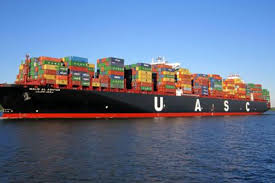
TEHRAN: United Arab Shipping Company is resuming business with Iran following the lifting of Western sanctions, despite the deep-seated political rivalry between the Islamic Republic and Saudi Arabia, one of the shipping line’s main shareholders.
A nuclear deal between world powers and Iran led to the removal on Saturday of international oil export prohibitions as well as restrictions on banking, insurance and shipping.


Sunni Muslim Saudi Arabia has grave reservations about the lifting of sanctions on its main regional rival, with which it cut ties earlier this month after its Tehran embassy was attacked following Riyadh’s execution of a Shi’ite cleric. Other Gulf nations which hold stakes in UASC also have difficult relations with Iran.
But a source close to the shipping line made clear that for UASC, commercial considerations were more important than political difficulties. Kuwait-headquartered UASC told Reuters on Wednesday it had “started accepting shipments to and from Iran”.
“It is important to note that a number of sanctions are still in place, therefore, the ability to accept cargo volumes to/from Iran will continue to be based on UASC’s strict internal compliance check, which is in line with the international laws and applicable sanctions,” it said in a statement.
With U.S. sanctions still in place, which exclude U.S. individuals, banks and insurers from trading with Iran including business denominated in dollars, shipping and marine insurance sources say many foreign companies are likely to tread carefully. UASC, founded in 1976 and with corporate offices in Dubai, is owned by the governments of the United Arab Emirates, Bahrain, Saudi Arabia, Kuwait, Qatar and Iraq.
Qatar holds a 51 percent stake in the group, Saudi Arabia has 35 percent and the remaining nations have smaller holdings. Sunni Muslim power Saudi Arabia cut relations with Shi’ite Iran earlier this month. The crisis erupted when Saudi Arabia executed a Shi’ite cleric on Jan. 2 and Iranian protesters retaliated by storming and setting fire to the Saudi embassy in Tehran.
In solidarity with Riyadh, Kuwait and Qatar subsequently pulled out their ambassadors from Tehran, and the United Arab Emirates downgraded its ties. Bahrain and two non-Gulf states, Djibouti and Sudan, severed relations completely. The source close to UASC told Reuters it was business as usual despite the tensions.
“Whatever makes sense commercially and whatever benefits customers are a priority. That is how UASC looks at this matter,” the source said. “Qatar and Saudi being the largest shareholders in UASC clearly do not impact its commercial activities.”
“Historically, since the company’s foundation, politics normally stayed away from the board room,” the source said. “UASC is commercially managed.” The source said UASC weathered Iraq’s invasion of Kuwait in 1990, even with staff relocating for a while.
“If you look at the shareholding nations’ relationships … they were not always at the best levels,” the source said. “Meetings continued and services were normal,” the source said, referring to the 1991 Gulf War in which a U.S -led coalition forced Iraq out of Kuwait.
UASC said prior to cutting ties, the Iranian market represented around 2 to 3 percent of the group’s overall business. The container market has been hit by a slowdown in demand from Asia, especially China. The sector is also suffering one of its worst recessions due to worries over the world economy and a surplus of vessels available for hire, leading shipping lines to seek what opportunities they can.
UASC, which suspended all Iran business in April 2013, said it would initially service the Islamic Republic using smaller feeder ships via third parties that shipped containers to Iran from the United Arab Emirates. It aimed to resume direct calls as soon as possible.
“For the shipping industry, the relaxation of sanctions is likely to create opportunities resulting in additional volumes due to the expected increase in infrastructure projects as well as the ability of Iranian consumers to access a wider range of foreign goods,” the UASC statement said.
Iran had depended on foreign ships for much of its imports, but has relied more on land routes and its own commercial fleet, particularly since 2012, as layers of sanctions led to an exodus of Western shipping firms, causing supply disruptions.
In August last year the world’s number three line, France’s CMA CGM, and number four, Evergreen of Taiwan, were the first to resume direct services to Iran. In late December MSC of Switzerland, the world’s second biggest container shipping line, resumed direct calls.
Maersk said this week it was “looking into how and when we can resume container transportation services to/from Iran”, without providing further details. Hapag Lloyd said this week it would continue to offer only feeder services, which started in November, adding it would handle “all Iran cargo with utmost care in terms of compliance”. According to consultancy Alphaliner, UASC’s market share, based on fleet capacity, is estimated at 2.6 percent versus nearly 15 percent for Maersk.