ISLAMABAD: A new World Bank report has said that urbanisation is giving Pakistan potential to transform its economy to join the ranks of richer nations.
However, the country, like others in South Asia, has so far struggled to make the most of that opportunity, said “Leveraging Urbanisation in South Asia: Managing Spatial Transformation for Prosperity and Livability” report, which was presented at the third Pakistan Urban Forum.


Difficulty in dealing with the pressures that increased urban populations put on infrastructure, basic services, land, housing and the environment has fostered what the report calls “messy and hidden” Urbanisation in Pakistan and throughout the region. This, in turn, has helped to constrain Pakistan’s full realization of the prosperity and livability benefits of Urbanisation.
“Properly managed Urbanisation can enhance both the prosperity and livability of cities,” says, Peter Ellis, Lead Urban Economist at the World Bank. “This is certainly the case for Pakistan, which is the most Urbanised large country in South Asia and derives so much of its economic growth from cities.”
Estimates indicate that cities generate up to 78 per cent of Pakistan’s gross domestic product and the government’s Vision 2025 places a premium on urban job growth. Planning ahead for urban growth can help create vibrant and productive cities that fuel the country’s growth, but that will require dealing with the problems posed by the country’s messy and hidden Urbanisation to date.
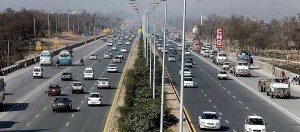
Messy Urbanisation in Pakistan is reflected in the existence of low-density sprawl and the fact that cities are growing outward beyond administrative boundaries, creating challenges for planning, transportation and the provision of public services. It also reflected in the widespread existence of poverty and slums. In Pakistan in 2010, about one in eight urban dwellers lived below the national poverty line and an estimated 46.6 per cent of the urban population lived in slums.
Hidden Urbanisation, the report said, stems from official national statistics understating the share of the population living in areas with urban traits. Officially, 36 percent of Pakistanis lived in urban settlements in 2010 but the World Bank estimates that the actual share of the population living in areas with urban characteristics may be as high as 55 percent. Acknowledging the true extent of urban areas can help to facilitate better planning and metropolitan management.
Failure to address these problems can make cities less livable. Pakistan faced an urban housing shortage of approximately 4.4 million units in 2010. The 2015 livability index of the Economist Intelligence Unit ranked Karachi 135th out of 140 cities; Dhaka was the only major city in South Asia with a lower ranking.
Since the turn of the century, Pakistan has seen a net decline in multi-city agglomerations – defined as continuously lit belts of Urbanisation containing two or more cities with a population each in excess of 100,000 – as the formation of new agglomerations was outpaced by the merging of existing ones. The Lahore agglomeration, for example, expanded to absorb those of Chiniot, Gujranwala, Gujrat, Lalamusa and Sialkot. In fact, the Lahore agglomeration meets its Delhi equivalent to form one continuously lit belt with an estimated population of 73.4 million, slightly less than the population of Turkey.
“Taking steps to help Pakistan’s cities to realize their potential is critical as the country’s urban population is expected to increase by approximately 40 million people to an estimated 118 million by 2030,” says Patchamuthu Ilangovan, World Bank Country Director for Pakistan. “The concentration of economic activity that accompanies such agglomerations improves productivity and spurs job creation – if the pressures posed by Urbanisation are properly addressed.”
To better tap into the economic potential that Urbanisation offers, the World Bank report said policymakers in Pakistan and the rest of South Asia should consider actions at two levels – the institutional level and the policy level. At the institutional level, Pakistan would benefit from improvements in the ways in which towns and cities are governed and financed. Specifically, the report said reform is required to address three fundamental urban governance deficits – in empowerment, resources and accountability, intergovernmental fiscal relations must be improved to address empowerment, practical ways must be identified to increase the resources available to local governments to allow them to perform their mandated functions and mechanisms must be strengthened to hold local governments accountable for their actions.