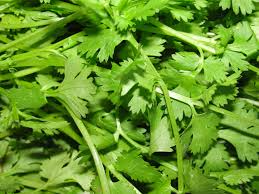
MEXICO CITY: Fresh cilantro from Puebla, Mexico, is now banned from entry into the U.S. because state and federal officials have linked it to recurring parasite outbreaks that began in 2012.
The Food and Drug Administration issued an import alert July 27, citing probable contamination of the cilantro with human feces as the likely cause of cyclospora parasite outbreaks in the U.S. this year and in 2012, 2013 and 2014.


“Districts may detain without physical examination shipments of fresh cilantro from Mexico offered for entry from April 1 through August 31 of every year, unless the cilantro is offered for entry from a firm listed on the Green List of this import alert,” according to the alert.
Texas health officials also weighed on July 27, posting updated outbreak numbers showing 205 cyclosporiasis illnesses in the state this year.
“Last year, Texas had 200 cases, some of which were associated with cilantro from the Puebla region in Mexico,” according to the update from the Texas Department of State Health Services.
The FDA implemented increased sampling of cilantro at the Mexican border in August 2014 as part of an ongoing investigation.
That investigation took FDA inspectors and their Mexican counterparts to 11 cilantro growing and packing operations in Puebla, Mexico, from 2013 through this season, according to the import alert. Five of the operations were linked by traceback to cyclospora illnesses in the U.S.
“(Inspectors) observed objectionable conditions at eight of them, including all five of the firms linked through traceback to the U.S. illnesses,” according to the import alert.
“Conditions observed at multiple such firms in the state of Puebla included human feces and toilet paper found in growing fields and around facilities; inadequately maintained and supplied toilet and hand washing facilities — no soap, no toilet paper, no running water, no paper towels — or a complete lack of toilet and hand washing facilities.”
Mexican and U.S. inspectors also found food-contact surfaces and equipment that was visibly dirty and reported water used for washing cilantro was vulnerable to contamination from sewage and septic systems.
“In addition, at one such firm, water in a holding tank used to provide water to employees to wash their hands at the bathrooms was found to be positive for (cyclospora,)” according to the import alert.
State health officials in Texas and Wisconsin linked multiple outbreak clusters in their states this year and the previous three years to cilantro from Puebla, Mexico, through traceback efforts, according to the FDA.