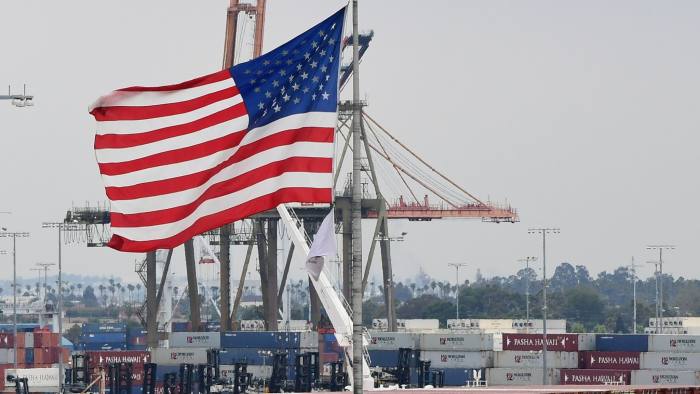
US companies are turning to their lawyers for help in containing the costs of President Donald Trump’s tariffs on goods from China, looking for legal loopholes to help avoid or reduce duties without shifting production to other countries.
Law firms and consultants say they are being inundated with requests for assistance from importers seeking to use provisions such as the “321 de minimis” rule, which allows goods worth less than $800 to be shipped to the US without being subject to tariffs.
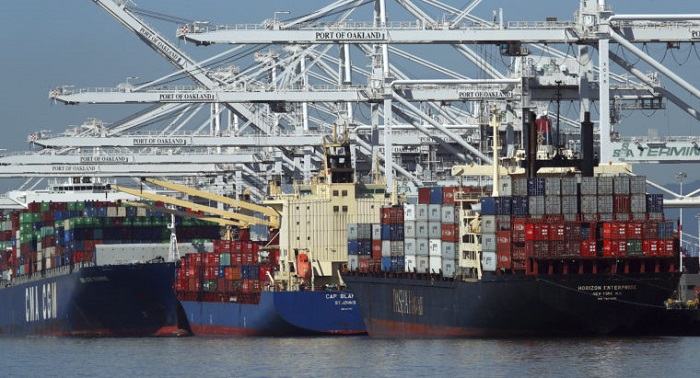

Corporate advisers caution that the attempts to reduce costs are not without their risks. Money can be clawed back — and top executives held accountable — if US authorities clamp down on a particular tariff avoidance method, they say.
“Customs in the end typically holds the highest officer in the company responsible, so it’s not just you that’s engaging in these activities, it’s also your CEO,” said Geoff Pollak, leader of Alvarez & Marsal’s global supply chain practice.
US companies have issued a series of warnings about the economic fallout from the trade war ahead of a meeting planned this week between Mr Trump and Xi Jinping, the Chinese president, at the G20 summit in Osaka.
In addition to billions of dollars in charges imposed on Chinese imports, the Trump administration is threatening levies on an additional $300bn of goods, increasing pressure on companies with longstanding relationships with Chinese suppliers.
Jason Bonfig, chief merchandising officer at electronics retailer Best Buy, told a recent hearing in Washington: “In many leading products, there is no practical substitute made outside of China in the near term.”
As a result, companies have been encouraged to “look at every possible way to reduce their tariff exposure” within the rules, said Edward Steiner, senior director for international trade and governmental relations at Sandler, Travis & Rosenberg. “The private sector is being incentivised to be creative in their mitigation strategy.”
Steve Orava, chair of King & Spalding’s international trade practice, said: “Companies have found ways to manoeuvre around some of the China tariffs, being creative and sophisticated in how they address the restrictions.”
Amy Magnus, director of customs affairs and compliance at Deringer, said importers have expressed particular interest in the “321 de minimis” rule. The limit on goods that can be imported without being subject to tariffs was increased to $800 from $200 three years ago. But only one shipment per customer is permitted each day.
“A lot of people are asking more questions about how this can work for them,” she said. “It is already happening now, and it will be happening a whole lot more if wave four [the threatened tariffs on more Chinese goods] comes in.”
Rules on “first sale valuation” provide another way to curb import duties. Tariffs are levied on the value of the good being imported, yet companies may be able to persuade customs officials to assess the levy on a lower valuation if the goods had been purchased at a lower price further down the supply chain. “If you’re talking about large volume, you’re talking about large savings,” Mr Steiner said.
US exporters can also use “duty drawback” to get tariff relief on goods that subsequently leave the country. John Garrison, chief executive of listed manufacturer Terex, told a recent investor conference the mechanism had allowed the Connecticut-based company to manage the direct impact of the tariffs “quite successfully”.
So-called “origin engineering” is another technique. Goods are typically considered to have come from a country if they have been “substantially transformed” there. Companies may be able to adjust parts of their production to argue the goods originated outside China.
Chicago-based Methode Electronics has been trialing manufacturing locations and component suppliers outside China. However, Ron Tsoumas, chief financial officer, told investors last week that it gets fairly complicated from a tariff standpoint on what constitutes “material transformation”.
Companies can also manage tariff expenses by using facilities known as “bonded warehouses”, where imported goods can be stored without payments being due. Duties are levied only when the goods leave the building.
The warehouses can be used either to manage cash flows by spreading the duties over time, or to pay lower rates if tariffs are reduced at a later date.
Lawyers said that none of the customs strategies offered a panacea, however. “Some of those can work well, some are a bit burdensome,” said Mr Orava. To exploit them successfully, he added, companies often needed to take up “a lot of internal resources, to make sure they’re fully compliant” with the rules.