Customs Today
  • Home
  • Islamabad
  • Karachi
  • Lahore
  • National
  • Transfers and Postings
  • Chambers & Associations
  • Business
No Result
View All Result
Customs Today
  • Home
  • Islamabad
  • Karachi
  • Lahore
  • National
  • Transfers and Postings
  • Chambers & Associations
  • Business
No Result
View All Result
Customs Today
No Result
View All Result
Home International Customs

US customs testing new 1:1 facial recognition security program

byCustoms Today Report
03/04/2015
in International Customs
Share on FacebookShare on Twitter

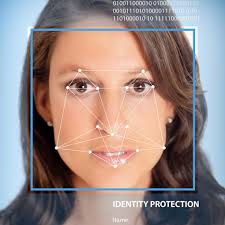
NEW YORK: US Customs and Border Protection (CBP), as part of the US Department of Homeland Security (DHS), began a new pilot facial recognition-based security program for international US travelers at the Washington, DC Dulles airport on March 11. Over the next couple months, the CBP will use the technology to detect those trying to travel with a passport that does not belong to them. Predictably, though, some of the details behind the new data-driven security effort have privacy advocates worried that federal agents are too invasive with law-abiding US citizens.

Here’s how the new program, unceremoniously named “1:1 Facial Recognition Air Entry Pilot,” works. Customs officers at Dulles will randomly select travelers returning to the US from foreign countries for participation. If selected, an agent will take your photograph and digitally analyze it against the picture stored in the chip inside your passport. If the match confidence score is low, an agent may pull you aside for further screening at their discretion. Otherwise, you’ll be sent on your way. The entire process is estimated to take just five to seven seconds per traveler to complete. Participation in the pilot, if randomly selected, is mandatory.


You might also like

lamic banking assets reach Rs14.47 trillion, sector share rises to 23%

07/03/2026

Shippers see temporary lull in exports

05/02/2020

The public-facing portion of the CBP pilot program will only last for a couple months, but the agency will keep the photographs taken for at least nineteen months. The agency has promised photos will be deleted after that time unless they become part of a criminal investigation. And they’ll only be used inside the DHS for the purposes of studying the effectiveness of the facial recognition in this security context.

“The technology is a stand-alone system and will not communicate with any other parties, databases or systems,” explains a CBP spokesperson. “CBP remains committed to protecting the privacy of all travelers.”

But as Vice’s Motherboard notes, the U.S. government has had some problems telling the full truth about programs like this in the recent past. In 2010, it was discovered that the TSA’s graphic full-body scanners were designed to have the capability to store and transmit images of travelers, despite multiple reassurances that this was not the case. And even if this pilot is limited, full implementation of the technology in the future could easily be a different story. We already know that the FBI is building its own facial recognition database with over 52 million images.


 

Tags: recognition security programtesting new 1:1 facialUS customs

Related Stories

lamic banking assets reach Rs14.47 trillion, sector share rises to 23%

byCT Report
07/03/2026

KARACHI: Pakistan’s Islamic banking sector expanded during 2025, increasing its share in the country’s financial system with assets reaching nearly...

Shippers see temporary lull in exports

byadmin
05/02/2020

Shippers expect the coronavirus outbreak to have the greatest effect on farm product exports, notably fresh fruits and vegetables, with...

Toyota Motor Corp. employees work on the Crown vehicle production line at the company's Motomachi plant in Toyota City, Aichi, Japan, on Thursday, July 26, 2018. Toyota may stop importing some models into the U.S. if President Donald Trump raises vehicle tariffs, while other cars and trucks in showrooms will get more expensive, according to the automaker’s North American chief. Photographer: Shiho Fukada/Bloomberg

Toyota SA to invest over R4 billion in car assembly and parts

byadmin
05/02/2020

Toyota SA Motors (TSAM) has announced a R4.28bn investment in local vehicle assembly and parts supply. Speaking at the company’s...

Over 80 Kilos Cocaine Found On Dutch Plane In Argentina; Three Dutch Arrested

byadmin
05/02/2020

More than 80 kilograms of cocaine was found on a Martinair Cargo plane in Argentina. Seven men, three of whom...

Next Post

US customs seizes Tobacco worth $300,000 at Lewiston port

  • Terms and Conditions
  • Disclaimer

© 2011 Customs Today -World's first newspaper on customs. Customs Today.

No Result
View All Result
  • Transfers and Postings
  • Latest News
  • Karachi
  • Islamabad
  • Lahore
  • National
  • Chambers & Associations
  • Business
  • About Us

© 2011 Customs Today -World's first newspaper on customs. Customs Today.