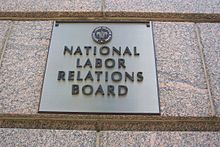
WASHINGTON :The National Labor Relations Board (NLR) in Washington on made it substantially easier for unions to bargain for higher wages and benefits, potentially opening the door for organized workers at fast-food chains and other franchises to negotiate with the larger corporations, like McDonald’s and Yum Brands, rather than with individual restaurants, where they would have a harder time achieving their goals.
“This is about, if employees decide they want to bargain collectively, who can be required to come to the bargaining table to have negotiations that are meaningful,” said Wilma B. Liebman, a former NLRB chairwoman who wrote a crucial dissent in a 2002 case on the subject. The ruling, which may eventually be challenged in court in a variety of individual disputes, changes the definition of a crucial employer-employee relationship that had held in some form since the 1980s.


Now, a company that hires a contractor to staff its facilities may be considered a so-called joint employer of the workers at that facility, even if it does not actively supervise them. A union representing those workers would now be legally entitled to bargain with the upstream company, not just the contractor, under federal labor law.