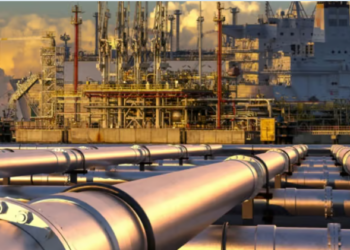
NEW YORK: Workers walk down the stairs of an oil storage tank at the Musket Corp. Windsor Crude Terminal in Windsor, Colorado, U.S., on Wednesday, April 2, 2014. Gasoline futures advanced as more Americans went to work in March, signaling that demand for the motor fuel will improve for the summer driving season.
Oil trucks sit parked at the Musket Corp. Windsor Crude Terminal in Windsor, Colorado, U.S., on Wednesday, April 2, 2014. Gasoline futures advanced as more Americans went to work in March, signaling that demand for the motor fuel will improve for the summer driving season.

Rows of coloured shipping containers from the Mediterranean Shipping Co. (MSC) stand on the quayside at the freight terminal at Piraeus port, operated by Piraeus Container Terminal SA (PCT), in Piraeus, Greece, on Tuesday, July 14, 2015. Greece’s last-ditch bailout requires the country to sell 50 billion euros ($55 billion) of assets, an ambition it hasn’t come close to achieving under previous restructuring plans.
Iran will need to import about 20 percent more gasoline to meet pent-up demand in the first year after economic sanctions are lifted, creating a market for some $1 billion in fuel sales from abroad, according to traders and analysts.
The nation with the world’s fifth-largest crude reserves may need to buy about 50,000 barrels a day of gasoline if sanctions are removed in early 2016 as expected, say analysts at consultants Facts Global Energy, IHS Inc. and Energy Aspects Ltd. With its refineries running at full capacity and unable to raise output for at least another year, Iran now imports 41,000 barrels a day, or about 9 percent of the gasoline it uses.
Iran was the Persian Gulf region’s biggest gasoline buyer before world powers imposed sanctions over its nuclear program, and it may need to import even more — as much as 70,000 barrels a day, according to two traders in the Middle Eastern market who asked not to be identified because they’re not authorized to speak to the media. The traders expressed doubts that Iran would open planned new refineries on schedule and said it will depend on imports for at least two to three more years.