
HONG KONG: US Federal regulators granted final environmental approval for building a pipeline and port facilities for shipping Rocky Mountain natural gas to Asia via the Oregon coast.
The final environmental impact statement prepared for the Federal Energy Regulatory Commission found that building and operating the gas terminal and pipeline would cause some environmental damage.
However, it noted the problems would be reduced to less-than-significant with mitigation measures proposed by project developers.
The Jordan Cove liquefied natural gas terminal at Coos Bay would be the first LNG port on the West Coast and would be linked to existing pipelines by construction of the Pacific Connector Gas Pipeline across southwestern Oregon.
The $7 billion project is led by Calgary, Alberta-based Veresen Inc.
Final commission approval is expected by the end of this year, with a notice to proceed from the commission by the middle of next year. Developers have said gas is not likely to begin flowing until 2019.
The projects were initially envisioned for importing natural gas into the U.S., but development of gas deposits in the Rockies created an abundance of the fuel that pushed the projects to switch to exports.
Veresen President and Chief Executive Officer Don Althoff said in a statement that the final environmental report was a significant milestone and represented three years of work.
Sen. John Barrasso, R-Wyo., urged the U.S. Department of Energy to approve the project quickly.
“The administration has given communities along the Gulf Coast and East Coast the opportunity to access overseas markets,” Barrasso said in a statement. “It must not leave the West behind.”
The 230-mile pipeline route from the farming town of Malin, just north of the California border, to Coos Bay has been opposed by private landowners and conservation groups. It crosses rivers, mountain ranges and a mix of private and public lands.
Lesley Adams, head of the Rogue Riverkeeper conservation group, said Oregon still has to decide on a Clean Water Act permit for the pipeline, and if the regulatory agency approves the projects, a coalition of landowners and conservationists plan to take legal action to reverse it.
“It’s clear to us there are adverse impacts to forests, streams and species,” Adams said. “One of the big problems with the project is water — raising temperatures and sediment impacts on fish.”
The port facilities to be built include a shipping channel, berths for LNG tankers and tugboats, and refrigeration facilities to turn the gas into a liquid.
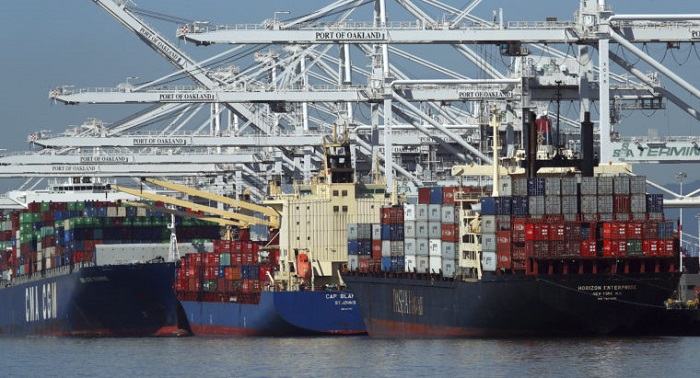
Shipping activity at Port Qasim on February 11
KARACHI: Three ships namely, Glen Canyon, Al-Salam- II and TSM Pollux carrying Containers, Gas oil and Palm oil were arranged...