
NEW YORK: U.S. stocks dropped Wednesday, pushing the Dow Jones Industrial Average to its lowest close since mid-April.
Major indexes have declined in four of the past five trading days as investors dialed back on risk after a multiweek rally.

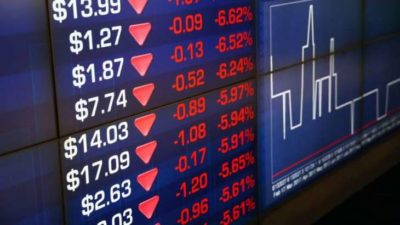
The Dow industrials fell 99.65 points, or 0.6%, to 17651.26, while the S&P 500 lost 12.25, or 0.6%, to 2051.12. It was the lowest closes for both indexes since April 11. The Nasdaq Composite fell 37.58, or 0.8%, to 4725.64, its lowest level since March 10.
“We have less conviction in aggregate than we have had in the last several years,” said Tom Clarke, co-manager of William Blair Macro Allocation fund, adding that the level of cash in the portfolio is relatively high.
Utility companies were the biggest gainers in the S&P 500, rising 1.1%. Those stocks tend to pay high dividends, which investors seek out in periods of uncertainty.
Oil prices advanced but pared their gains Wednesday after the Department of Energy reported another big increase in weekly crude-oil stockpiles. ENLARGE
Bank stocks, which have slumped this year on expectations that the Federal Reserve isn’t in a hurry to raise interest rates, declined further Wednesday.
“For financials, you can only get so much momentum in the space if there’s no real picture as to when rates are going to go higher,” said R.J. Grant, associate director of equity trading at KBW Inc.
Goldman Sachs Group fell $3.07, or 1.9%, to $160.07, making it one of the largest decliners in the Dow.
The KBW Nasdaq Bank index of large U.S. commercial lenders lost 2% and has dropped 5.1% over the past week.
The Nasdaq Biotechnology index, often a beneficiary of investors’ appetite for risk, sank 2.9%, bringing its losses over the past week to 7.1%.
Elsewhere, Priceline Group fell 101.60, or 7.5%, to 1,253.04 after the company warned investors that its profit growth would slow sharply in the second quarter. It was the stock’s biggest one-day percentage fall since November.
The dollar rose for a second consecutive day but has fallen against most major currencies so far this year. The dollar rose 0.4% against Japan’s yen on Wednesday to ¥107.01.
“The level of the dollar will be critical to how well the market performs,” said Patrick Spencer, vice chairman of equities at Robert W. Baird & Co.
While he expects the dollar to remain near its current levels, any meaningful recovery of the U.S. currency would hurt stocks around the world, he added. In recent quarters, dollar strength crimped profits for U.S. multinationals companies.
U.S. crude oil settled up 0.3% at $43.78 a barrel, but pared earlier gains after data showed the glut of crude oil continues to grow.