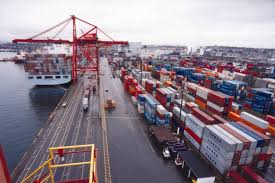
OTTAWA: The Port of Vancouver took it on the chin from a number of global market forces in 2016’s first half.
Total cargo shipped through the port dropped 5.9% to 66 million tonnes compared with the same period in 2015. Biggest losers included crude oil, exports of which fell 53.3%; thermal coal, down 38.7%; fertilizers, down 15.9%; and machinery, vehicles, construction and materials, 11.7% lower than in 2015’s first half.


Container traffic, which has been a consistent good news story for B.C. ports over the past few years, especially in 2015, when major deep-sea container shipping companies diverted large numbers of U.S.-bound containers to West Coast Canadian ports because of goods movement interruptions caused by protracted dock worker contract negotiations at West Coast U.S. ports.
The Port of Vancouver reported that first half 2016 container cargo was 6.5% lower than the same period a year earlier. By comparison, overall container traffic shipped through the port in 2015 increased 5%.
The drop reflects more than a blip on the container shipping radar. The global container shipping industry continues to take on water in a market struggling with too many ships chasing too few containers.
A recent release from Drewry, a U.K.-based shipping consultancy, noted that first half 2016 container industry revenue is down 18% worldwide compared with the same time a year ago. If the trend continues, Drewry estimated that the sector’s income would shrink by US$29 billion compared with 2015.
Last year, Drewry had projected global container traffic to grow 4.5% annually from 2015 through to 2019 after rising 5.4% each year from 2010 to 2014, but in late 2015, the company significantly downgraded its global container port throughput projections. In addition to reducing 2015’s growth to 2.2% from 4.3%, it cut 2016’s growth to 3.3% from the previous estimate of 4.9%.
Main reasons for that revised outlook included the slowdown in the Chinese economy. But Robin Silvester, the Vancouver Fraser Port Authority’s president and CEO, downplayed the overall cargo shipping gloom.
He said in a press release that the long-term outlook for Canadian trade “is one of growth.” The port also noted that the latest container traffic forecast for Canada’s west coast predicts annual growth of 4% from 2016 through 2030.
However, the report from Ocean Shipping Consultants, a U.K.-based economic consultancy, also noted that the outlook for the Chinese economy “is considerably more uncertain than was noted in earlier forecasts” and that competition for B.C. ports with Californian and U.S. east coast ports will remain intense.
Advantages for Vancouver and Prince Rupert over their American port counterparts include a relatively low Canadian dollar and better rail service. B.C. ports also fill more empty outbound containers with wood products and other cargo for their return trip to Asia than do their American counterparts.
Bright spots in the port’s 2016 mid-year cargo stats report included grain shipments, which were up 4.8% overall. Another record grain harvest in Canada is expected this year, which will test the port’s grain-handling capacity.
Caution flags over the movement of grain through Port of Vancouver were raised August 17 in a CP Rail (TSX:CP) press release, which called on “all supply chain partners to work collaboratively to continue moving record amounts of grain, as CP did during 2013-14, 2014-15 and 2015-16 crop-years.”
The release pointed out that in order for that to happen “it is essential that port terminals such as Vancouver operate on a 24/7 basis, remain fluid and that the seaway, especially the Port of Thunder Bay, be utilized to take pressure off Vancouver.”
In the Port of Vancouver’s cargo press release, Silvester said, “Shippers continue to express confidence in the Port of Vancouver, and we continue to see significant investment projects moving forward in the gateway.”