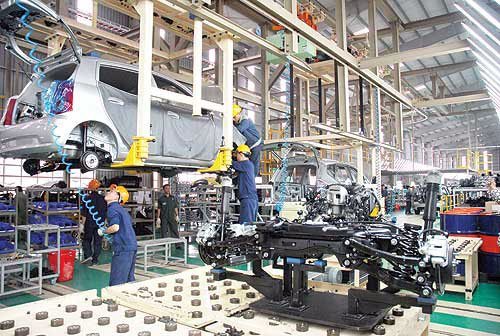
HANOI: According to Vichai Jirathiyut, president of the Thailand Automotive Institute (TAI), the Vietnam auto industry will have the fastest growth of all in Southeast Asia over the next 20 years. This growth will be the result of increasing consumer demand, a young workforce, and strong governmental support for the industry.Vichai predicts that Vietnam’s auto industry will annually produce 220,000 units by 2020 and 1.5 million units by 2035.
Vietnam’s Automobile Manufacturers’ Association (VAMA) has produced similarly rosy numbers. In 2014, there were 157,810 vehicles sold in the country, this was a 43 per cent YoY increase.Breaking these numbers further down, there was a 43 per cent YoY increase in the sale of personal cars, with 100,000 units sold, and a 42 per cent YoY increase in truck sales, with 57,371 vehicles sold.
You might also like


According to Vietnam’s Ministry of Industry and Trade, the country’s local automotive industry will see a growth rate of 4.4 per cent this year, producing 200,000 vehicles.Achieving this growth may be difficult, however. Many companies are currently reconsidering their Vietnam business strategy in reaction to the Asean tax cut road map that Vietnam must follow.
The Asean Trade in Goods Agreement, which will be implemented in 2018, will allow cars to be imported duty-free from other Asean countries. This may result in Vietnam becoming increasingly dependent on foreign vehicles as import taxes levied on automobiles will sharply drop, or be exempted following the road map of tariff reduction commitments resulting from the trade agreement.
Vietnam is also battling against the auto industry’s current low localization rate of just 10-30 per cent depending on the type of vehicle.As a result, when the import tariffs on foreign made vehicles are lowered in 2018, the importation of vehicle parts into Vietnam for assembling will be more expensive than importing completely built vehicles.