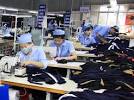
HCM CITY: Clothing and apparel is expected to remain the country’s top export item in the foreseeable future, contributing almost 20 percent of the projected growth in total merchandise exports in the decade to 2030, according to an HSBC report.
Global Trade Connection, released on Thursday, said Viet Nam had also built up a strong presence in the global market for telecommunications in recent years and this should put it in a good position to meet rising demand for consumer goods in emerging Asia.
You might also like


Indeed, behind clothing and apparel, ICT equipment would make the second largest contribution to Viet Nam’s export growth in 2015-30. Viet Nam’s geographical location in Asia, with good access to India, China and Southeast Asia, left it well placed to trade with fast-growing neighbours.
It was anticipated that the country’s fastest-growing export destinations in the decade to 2030 would be China, India and Malaysia, with exports to all these growing by at least 14 per cent a year.
Within emerging Asia, trade liberalisation had risen in recent years and free-trade negotiations between ASEAN members were well under way.
Though the US remained Viet Nam’s largest export market, China was forecast to become Viet Nam’s largest export destination by 2030.
The report forecast China’s economy to grow by 5.5 percent a year in the decade to 2030, slower than in the decade to 2014 but still a healthy pace.
Viet Nam’s location and strong foothold in both clothing and telecoms meant it was well-placed to access this buoyant consumer market.
The US and Viet Nam enjoyed historically strong commercial linkages, and by 2030 the US would still account for 15 percent of Viet Nam’s exports. The two were among the 12 countries currently negotiating the Trans-Pacific Partnership (TPP). Once the agreement was finalised, Viet Nam’s exports would become even more competitive in the US, probably boosting trade between the two countries.
According to the annual World Economic Forum Global Competitiveness report, Viet Nam’s score for infrastructure had improved over the last decade, supported by higher FDI inflows and reflecting strong growth. However, it still ranked only 81st in infrastructure out of 144 countries in the latest report, well behind Thailand (48th) and Indonesia (56th).
Substantial infrastructure development meant industrial machinery would continue to be Viet Nam’s largest import sector through 2030, contributing around a quarter of import growth over the forecast period.
The next two most important import sectors would be textiles and ICT equipment, supporting Viet Nam’s export base in these sectors.
China and South Korea, emerging Asia’s two leading export nations over the last decade, would continue to be Viet Nam’s largest import partners through 2030. As well as having strong footholds in the global market for industrial machinery, the two countries also presented relatively easy transport logistics, with China sharing a border with Viet Nam and South Korea just a short journey by sea.
By late 2015, the Regional comprehensive Economic Partnership, a free-trade agreement being negotiated among ASEAN countries and the six states with which ASEAN had existing trade agreements, was due to be finalised and this should give a further boost to regional trade.
Imports from India would also grow strongly, contributing 14 percent of total import growth in the decade to 2030, propelling India past Singapore to become Viet Nam’s third largest import partner.