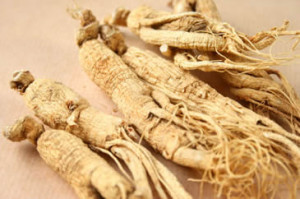
HANOI: Vietnam’s government has green-lighted an ambitious proposal to grow Panax vietnamensis, or Vietnamese panax, in a huge area of one central province, which the project planner firmly believes will yield up to US$2 billion in annual export revenue.
Panax vietnamensis is locally known as Ngoc Linh ginseng, a name derived from the fact that the plant is primarily found on Mount Ngoc Linh in Nam Tra My District of Quang Nam Province. In Vietnam, Ngoc Linh ginseng is considered a prized herbal medicine, and therefore very commercially valuable.


The administration of Nam Tra My District has prepared an ambitious project to attract businesses to grow ginseng, particularly the Ngoc Linh species, on a 15,000 hectare area in the locale, and has recently received a go-ahead from the government.
“By 2030, Vietnam will be able to produce 500 to 1,000 metric tons of ginseng a year, raking in $1.5-2 billion from exports,” Nam Tra My chairman Ho Quang Buu told Tuoi Tre (Youth) newspaper.
Buu is the main author of the project, called “Preserving and Developing the Ngoc Linh Ginseng Area by 2030,” which requires a huge investment of VND9 trillion ($401.79 million). “Such a huge amount of money will be earmarked for the 15-year course of the project,” Buu said, when asked if the project is too costly.
“It should be noted that we will source VND7 trillion [$312.5 million] from private investors, and the state budget only covers VND2 trillion [$89.29 million].” Buu expressed his strong belief that the project will be effective if properly implemented, with profits from growing ginseng able to rise ten-fold after only five years.
Many ginseng growers in Tra Linh Commune of Nam Tra My have reaped more than VND30 billion ($1.34 million) after five years, with an initial investment of only VND3 billion ($134,000), he elaborated. Nam Tra My is in fact the poorest among all districts across Vietnam, with 62.9 percent of local households living in poverty.
“But there are still 30 billionaires in the locality, who earn their wealth from ginseng,” Buu said. “So I do not think new businesses will not be able to gain similar success.”