HANOI: Vietnam reached a framework deal with the European Union on a free trade agreement in August, increasing pressure on Hanoi to streamline the country’s logistics costs. “Vietnam must do more to make its cargo operations more competitive with its regional rivals,” Robert Hambleton, general director of Cai Mep International Terminal, said.
Figures released by Maersk Line last year indicated that Vietnam’s logistics costs, at 25 percent of its GDP, are higher than those of regional competitors like China, where they total 18 percent of GDP.


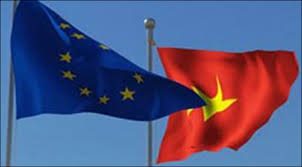
In August, the European Union and Vietnam reached a framework agreement on the creation of a free trade zone. Under the agreement, almost all customs barriers between the partners will be eliminated in the next decade.
The European Union is also negotiating FTAs with other Association of Southeast Asian Nations countries. Hambleton pointed out that competition with regional rivals will only intensify, since FTAs are country to country.
There are other pressures on Vietnam to become more competitive. It is engaged in talks with 11 other Pacific Rim countries, including the United States, to agree a deal on the so-called Trans-Pacific Partnership. After meeting in August in Hawaii, trade ministers from the 12 countries said they had made significant progress and were now focused on resolving a limited number of remaining issues.
Most of Vietnam’s international trade is conducted through the Cai Mep cluster of terminals near the southern metropolis of Ho Chi Minh City. Government-owned companies have a controlling stake in five of the seven terminals in the cluster; CMIT is one of them and is operated by APM Terminals under a concession agreement.
In Europe as a representative of the Vietnam Business Forum, Hambleton held discussions with EU partner organizations in the context of the upcoming FTA. “Vietnam is keen to expand its manufacturing base and expand its export market, so the FTA and the TPP are massive for the country,” he said. “If these deals are signed then as a terminal operator we have to be ready.” To this end Hambleton is in talks with the Vietnamese government about easing port dues and cabotage restrictions.
The transport ministry has introduced minimum guaranteed port tariffs – so-called floor rates – to help recoup some of its heavy investment in cargo terminal infrastructure and these floor rates have discouraged some lines from using Vietnam’s terminals.
“Port dues are very expensive by regional standards and we have tried to explain to the government that, far from losing revenue by lowering tariffs, if you reduce port dues you attract more shipping lines and your income goes up,” Hambleton said. He said Vietnam needed to seize the opportunity because lines’ utilization rates are not yet back to 90 to 95 percent and they are looking for extra ports of call.
“There is a lot of cargo being moved from factories around Hanoi and shippers are desperate for more feedering services in the South China Sea region,” he said.
Another issue being discussed with the government is cabotage restrictions. A cabotage law imposed in 1990 created significant restrictions on foreign-owned vessels to protect the domestic shipping industry.
Hambleton said both international shipping lines and terminal operators were encouraging the government to relax the cabotage law while maintaining adequate protection to domestic shipping lines.
He said CMIT was happy to develop as a regional hub. “Regional hubs are not only a hub for traditional small feeders, but are a spoke for the mega hubs,” he said, while pointing out that Cai Mep was strategically placed between the mega hubs of the Malacca Strait and the Chinese mainland. A version of this story originally appeared in IHS Maritime Fairplay, a sister product of JOC.com within IHS.