HANOI: ASEAN, together with China, should be the most important partner for Vietnam. However, Vietnamese enterprises are not keen on exporting their products to the market. Do Quoc Hung, deputy director of the Asia-Pacific Market Department under the Ministry of Industry and Trade, on November 2 said the foundation for Vietnamese enterprises to export to ASEAN was ‘not stable’. “The ASEAN Economic Community (AEC) was formed in late 2015. However, there are still challenges for Vietnam’s export products,” Hung said.
Non-tariff barriers still exist among ASEAN countries, and they don’t apply the same tariff in trade with non-ASEAN countries. The tariff abolition proportion of ASEAN 6 countries is 98 percent, while the figure is 91 percent for Vietnam, Laos and Myanmar, and expected to rise to 98 percent by 2018. As soon as ASEAN countries removed the tariff barriers, they have installed technical barriers to protect local production and restrict imports from Vietnam.

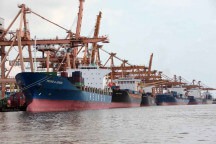
Vietnam exports many products to ASEAN, including textile & garment, footwear, fertilizer, farm produce, food and building materials. However, most enterprises sell products to importers. Despite high demand, Vietnamese enterprises still don’t have opportunities to access the market and their goods cannot go for good prices as importers always try to force prices down. Hung said this was the reason why Vietnamese products, though having high quality, still cannot build their brands in ASEAN markets. In many cases, importers sell products under the name of domestic companies instead of Vietnamese.
“In regional economic integration, the government and management agencies open the market, remove tariff barriers and build infrastructure. However, without the involvement of businesses, the integration frameworks won’t have much significance,” he said. An analyst said Vietnam can make products which are in high demand in ASEAN. Fertilizer is an example. Cambodia, Laos, Thailand and Myanmar have high demand for fertilizer. Cambodia and Myanmar have to import 90 percent of the fertilizer needed to serve domestic production. Vietnam exports 300,000 tons of fertilizer to Cambodia every year.
The import tariff on Vietnam’s fertilizer has been cut to zero percent. However, it has to compete fiercely with Indonesian and Chinese products, while low-quality and counterfeit goods exist everywhere. The two-way trade turnover between Vietnam and ASEAN in the last 10 years increased from $3.3 billion in 1995 to $42.1 billion in 2015. Vietnam’s export turnover to ASEAN grew by 17.1 percent, with the export turnover rose from $1 billion to $18.3 billion in 2015, according to the General Department of Customs (GDC).