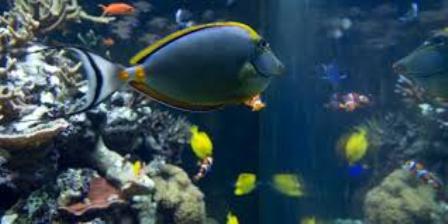


CANADA: If you’ve ever wanted to see coral reefs but don’t fancy getting wet then London’s Natural History Museum may be the place for you.
The museum’s new show plunges into the underwater world, featuring a “virtual dive” that provides a 180-degree view of five coral reefs controlled by a joystick, including one vista with a manta ray in Komodo Island, Indonesia.
“We know more about outer space than we do about the oceans,” said Miranda Lowe, the museum’s collections manager for marine invertebrates. She said the patchy health of coral reefs globally could have dramatic consequences for the thousands of species of marine life that depend on them, and added the recent cyclone in Vanuatu could spark a massive bleaching of corals if water temperatures rise substantially.
The exhibit also includes six corals collected by Charles Darwin demonstrating his first-ever scientific theory about how coral reefs are formed. Hint: it involves volcanos.
Other specimens include a parrotfish and hawksbill turtle, which both feed on coral, helping it to regenerate. That isn’t the case for the crown-of-thorns starfish, which is an increasing threat to reef stability.
In addition to marine species living in coral reefs, the show also features those that just come by to hunt, including the jaw of a tiger shark. The usually solitary sharks often swim thousands of miles to Raine Island in Australia’s Great Barrier Reef to feast on weak and injured turtles during nesting season, using their razor-sharp teeth to bite through turtle shells.
Lowe said the exhibit aims to increase understanding of the human impact on the oceans, noting that how the waste we dispose of affects turtles, fish and other animals.

Karachi Port sets 138-year cargo handling record
KARACHI: Pakistan's maritime sector has achieved a major milestone as Karachi Port set a new record in its 138-year history...