

PERTH: VLCC rates eased this week following a second consecutive week of demand losses, said shipbroker Charles R. Weber in its latest weekly report. According to the shipbroker, “in the Middle East, the fixture tally dropped to its lowest level since the final week of 2013, with just ten reported. The West Africa market saw just two fixtures, the fewest since late July. On a combined basis, both markets were off by 31% on a w/w basis and by 63% from the YTD average. Slower demand was not entirely unexpected as charterers paused between the October and November Middle East program and as such the impact on rate progression was cushioned”.
It added that “while market prospects remain strong on a directional basis, some immediate near‐ term headwinds are materializing which will likely lead to stronger negative pressure on rates during the upcoming week. On the supply side, the number of projected October surplus units stands at 13 – which is high in relation to the average of nine observed between January and September. On the demand side, Basrah stems, which became available this week, show a nearly 900,000 b/d m/m supply reduction from Iraq’s southern oil terminal. Aframaxes and Suezmaxes appear to be the hardest hit, but the implied VLCC count is also down sharply; some 32 VLCC‐sized stems are noted, marking a 26% m/m reduction. Moreover, the date distribution of the VLCC stems shows just seven cargoes for loading during the first ten days of November. While the schedules of other regional producers are yet unknown, the sharp Basrah reduction could weigh heavily on market fundamentals when participants progress concertedly into early‐November dates amid a longer number of carryover units, failing a compensating surge in early month cargoes elsewhere”.
According to CR Weber, “while the wider supply/demand imbalance which will face market participants at the start of the November program will likely be accompanied by softer rates, the concentration of demand given a later start to November Middle East cargoes could limit the extent of losses thereof. Thereafter, as participants progress further into November dates, stronger demand could limit further losses and provide a fresh potential upside impetus, but some uncertainty remains. Recent reports indicate a steady Saudi production and supply rate at high levels, which would be supportive of VLCC demand, simultaneously reported production and supply data during late Q3 mismatches with fixture and loading data. We nevertheless continue to expect directional improvements through the remainder of the year as overall demand should remain elevated and characterized by a continuation of wider geographic distribution of loading areas (which is highly supportive of fundamentals given the greater implied fleet efficiency). Additionally, delays in Asia appear set to accelerate on rising regional arrivals which should trim availability replenishment when participants move into the December program”.
In the Middle East, CR Weber noted that “rates to the Far East averaged ws79.50, representing a w/w loss of two points. Corresponding TCEs eased 4% to ~$90,317/day. Rates to the USG via the Cape were assessed at an average of ws49.6, off 2.7 points w/w. Triangulated Westbound trade earnings eased by a marginal 0.7% w/w to an average of ~$102,306/day”. In the Atlantic Basin, rates in the West Africa market continued trail the Middle East. Rates on the WAFR‐ FEAST route gained 2.8 points w/w to an average of ws84.5 with a corresponding average TCE gain of 4% to ~$93,516/day”.
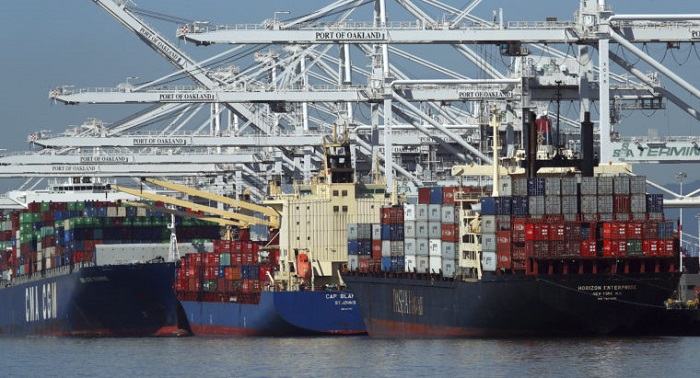
Shipping activity at Port Qasim on February 11
KARACHI: Three ships namely, Glen Canyon, Al-Salam- II and TSM Pollux carrying Containers, Gas oil and Palm oil were arranged...