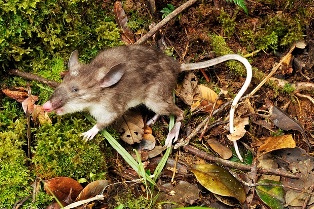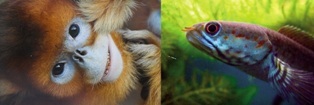


NEW DELHI: A monkey that sneezes when it rains and a “walking” fish are among more than 200 species discovered in the ecologically fragile eastern Himalayas in recent years, according to conservation group WWF.
WWF has compiled a survey of wildlife discovered by scientists across Bhutan, northeast India, Nepal, northern Myanmar and southern Tibet, in an attempt to raise awareness of the threats facing the sensitive region.
The species include what the WWF described as a blue-coloured “walking snakehead fish” which can breathe air, survive on land for four days and slither up to 400 metres (a quarter of a mile) on wet ground.
Others include an ornate red, yellow and orange pit viper that could pass for a piece of jewellery, a fresh-water “dracula” fish with fangs and three new types of bananas.
In the forests of northern Myanmar, scientists learnt in 2010 of a black and white monkey with an upturned nose that causes it to sneeze when it rains.
On rainy days they often sit with their heads tucked between their knees to avoid getting water in their snub noses.
The 211 new species discovered between 2009 and 2014 include 133 plants including orchids, 26 kinds of fish, 10 amphibians, 39 invertebrates, one reptile, one bird and a mammal.
Dipankar Ghose, WWF director of species and landscapes in India, described the region as a “unique treasure house” that has not yet been fully explored by scientists.
In its report WWF said the region, home to Mount Everest, is rugged with vast forests, rivers and streams protected by mountain ranges, meaning species have evolved and survived unnoticed for centuries.

Karachi Port sets 138-year cargo handling record
KARACHI: Pakistan's maritime sector has achieved a major milestone as Karachi Port set a new record in its 138-year history...