
Customs Today
  • Home
  • Islamabad
  • Karachi
  • Lahore
  • National
  • Transfers and Postings
  • Chambers & Associations
  • Business
No Result
View All Result
Customs Today
  • Home
  • Islamabad
  • Karachi
  • Lahore
  • National
  • Transfers and Postings
  • Chambers & Associations
  • Business
No Result
View All Result
Customs Today
No Result
View All Result

Water is everywhere in our solar system suddenly it seems

byCustoms Today Report
17/03/2015
in Uncategorized
Share on FacebookShare on Twitter

You might also like

Electricity price may rise as Discos seek extra fuel cost charge

18/04/2026

Pakistan returns to global markets with $500m Eurobond after four years

18/04/2026

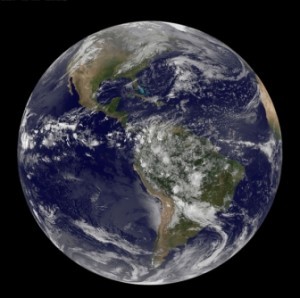
MEXICO: Oceans trapped under ice appear to be pretty common in the solar system and one of them, on a small moon of Saturn’s, appears to be quite hot.
This week in the journal Nature, an international team of scientists reported evidence for hydrothermal vents on the Saturnian moon Enceladus, with temperatures of its rocky core surpassing 194 degrees Fahrenheit (90 degrees Celsius) in spots. The discovery, if confirmed, would make Enceladus the only place other than Earth where such chemical reactions between rock and heated water are known to be occurring today and for many scientists, it would make Enceladus a most promising place to look for life.
“The most surprising part is the high temperature,” said Hsiang-Wen Hsu, a scientist at the University of Colorado’s Laboratory for Atmospheric and Space Physics and lead author of the paper. “But that’s the number we could derive.”
Meanwhile, in a paper published Thursday in The Journal of Geophysical Research: Space Physics, another team reported signs of another under-ice ocean, on Ganymede, the largest of Jupiter’s moons. Scientists are already convinced that there is a large ocean, also covered by ice, on another Jovian moon, Europa. NASA’s Galileo spacecraft had also found hints of hidden water on Ganymede and on another of Jupiter’s moons, Callisto.
The new research, using the Hubble Space Telescope, fits with the earlier hints. “This is now stronger evidence for an ocean,” said Joachim Saur, a professor of geophysics at the University of Cologne in Germany and the lead author of the Ganymede paper.

Related Stories

Electricity price may rise as Discos seek extra fuel cost charge

byCT Report
18/04/2026

ISLAMABAD: Electricity consumers may face higher power bills starting in May, as power distribution companies have requested the national energy...

Pakistan returns to global markets with $500m Eurobond after four years

byCT Report
18/04/2026

ISLAMABAD: Pakistan has re-entered the international financial market after a gap of four years by successfully issuing a $500 million...

Faisalabad Customs promotes EFS to boost efficiency: Collector Dr. Rizwan Basharat

byCT Report
18/04/2026

FAISALABAD: Officials from Pakistan Customs have urged exporters to fully utilise the Export Facilitation Scheme (EFS), highlighting that businesses at...

Aurangzeb advance economic diplomacy, engages global partners in Washington

byCT Report
18/04/2026

ISLAMABAD: Federal Minister for Finance and Revenue Senator Muhammad Aurangzeb, concluded final day of IMF-WB Spring Meetings in Washington. He...

Next Post

$30 to $40 a month Apple online TV service with 25 channels to hit market in late 2015

  • Terms and Conditions
  • Disclaimer

© 2011 Customs Today -World's first newspaper on customs. Customs Today.

No Result
View All Result
  • Transfers and Postings
  • Latest News
  • Karachi
  • Islamabad
  • Lahore
  • National
  • Chambers & Associations
  • Business
  • About Us

© 2011 Customs Today -World's first newspaper on customs. Customs Today.